

Picking the right outdoor lighting changes how a home feels after dark. I’ve covered porches and side yards where a single wall sconce turned a dark corner into a welcoming entry, and I’ve seen solar floods turn a back patio into a space people actually use at night. For folks who don’t want to run wires or hire an electrician, the wireless category offers genuinely useful options, from classic wall-mounted fixtures that take a standard bulb to solar-powered floods that mount in minutes. Below, I’m sharing four specific picks that cover different needs: ambient porch lighting, automatic dusk-to-dawn entry lights, motion-activated security floods, and discreet solar deck lighting.
The Shortlist At A Glance
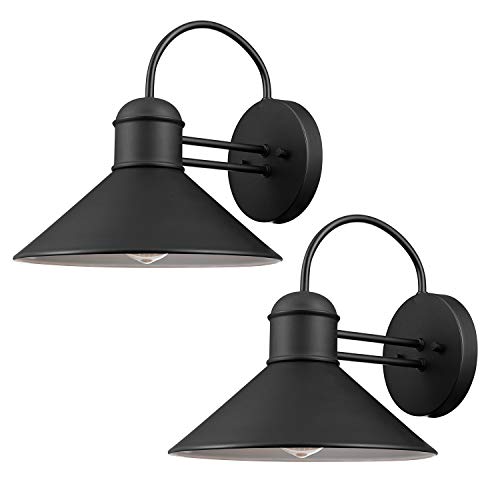
Globe Electric 44165 Outdoor Wall Sconce, 2-Pack
GAAZIE Solid Copper Dusk to Dawn Wall Lantern

MIHANI Solar Flood Lights 2500LM Motion Sensor

MIHANI Solar Motion Deck Lights, 2 Pack
The Strengths Of Each Pick
For shoppers who want the look of a traditional porch sconce without running new wire, this Globe Electric pair fits the brief in a familiar, understated way. The black finish pairs cleanly with white trim, and the curved profile reads as “modern farmhouse” without leaning trendy. Because it’s sold as a 2-pack, you can flank a doorway or front-gate post with matching fixtures, which gives a home a more pulled-together look for less effort than mixing styles.
What I appreciate here is the flexibility. The bulb-not-included design means you choose the color temperature, from warm vintage Edison to cool daylight, and you control brightness. Compared to the copper lantern further down this list, this one trades premium materials for affordability, which makes sense for rental properties or first-time homeowners testing outdoor lighting for the first time.
What Stands Out
- Two-pack value lets you light both sides of an entry for one project
- Compatible with any standard bulb, so you pick warm, cool, or vintage tone
- Weatherproof rating handles typical porch exposure without complaint
- Black finish hides dust and minor weathering better than brass or copper
- Clean lines blend with modern, craftsman, and transitional exteriors
Things To Consider
- Bulb sold separately, so factor in the cost and effort of choosing one
- Metal body will show fingerprints and water spots during installation
- Hardwired, so existing junction box wiring is required at the mount point
Who It Suits Best
Renters and first-time homeowners who want a low-fuss, classic-looking porch sconce that accepts any standard bulb they already trust.
Where Another Pick Suits Better
The GAAZIE copper lantern is a better match for homeowners wanting a more premium, dusk-to-dawn entry fixture without swapping bulbs manually.
This GAAZIE lantern reads as an heirloom piece from the moment it comes out of the box. The hand-finished copper body, brushed detailing, and clear beveled glass give it the kind of presence you’d expect on a craftsman bungalow. At roughly 18.5 inches tall, it sits at a comfortable scale for a standard entryway without overwhelming a modest porch.
What really separates this from a basic fixture is the built-in dusk-to-dawn sensor (a small light-sensing component that turns the fixture on at sunset and off at sunrise automatically). Owners don’t have to remember to flip a switch, which makes a noticeable difference in daily convenience. Compared to the Globe Electric sconce above, this trades modern simplicity for material warmth and an automatic on/off feature that’s harder to retrofit later.
Positive Points
- Solid copper body ages into a natural patina that adds character over time
- Built-in dusk-to-dawn sensor eliminates manual switching
- Beveled glass panels cast a welcoming glow with attractive shadow patterns
- Hand-finished surface gives each unit a slightly unique look
- E26 base accepts a wide range of standard bulbs
Worth Noting
- Copper will patina, which some shoppers love and others may want to polish away
- Heavier than aluminum fixtures, so the mount must anchor into solid material
- Higher tier than basic porch lights, so it makes sense only where the entry deserves it
Quick Facts
Made For
Homeowners upgrading a craftsman, traditional, or vintage-style entry who want an automatic light fixture with premium materials.
Skip It When
Renters or anyone wanting low-commitment lighting will find the MIHANI solar deck lights a more flexible, no-install alternative.
For homeowners serious about lighting up a driveway, side yard, or garage apron, this MIHANI solar flood is in a different category from wall sconces. Three adjustable lamp heads pivot to cover a wide swath, and the PIR sensor (passive infrared, which detects body heat and movement) triggers the light only when something actually approaches. For someone arriving home late or watching a delivery driver pull up, that on-demand brightness matters.
Where the GAAZIE copper lantern is decorative and ambient, this MIHANI flood is functional and security-minded. Two floods come in the box, which lets you place them on opposite corners of a garage or fence for overlapping coverage. In most yards, mounting takes minutes because there’s no wiring to run, which is the real reason wireless solar floods have become so popular.
What Earns Its Place
- Triple adjustable heads cover a 270-degree angle, replacing several single-head floods
- PIR motion sensor activates the light only when needed, preserving battery life
- 2-pack value lights a full driveway or backyard corner on one purchase
- No wiring needed, so renters and older homes can install without an electrician
- IP65 waterproof rating handles rain, snow, and seasonal storms
Trade Offs
- Output depends on daily sun exposure, so heavily shaded installs may underperform
- Bulkier head assembly looks industrial, not decorative, on a refined entry
- Cold winter nights shorten runtime since lithium battery capacity drops in low temperatures
Right Fit For
Homeowners wanting motion-triggered security lighting for a driveway, side yard, or garage without paying for professional installation.
Look Elsewhere When
Shoppers wanting gentle ambient lighting on a small porch will do better with the Globe Electric sconce, which suits close-up curb appeal over wide coverage.
Deck and step lighting solves a different problem than floods or porch sconces. I think of it as the safety-and-ambiance layer that prevents a missed step at night, and this MIHANI pair handles it well. The larger tempered glass solar panel recharges faster than basic plastic panels, which is the practical difference on cloudy days when guests are still arriving.
The PIR motion inductor (another passive infrared sensor) keeps the light off when no one is around, then brightens as someone steps onto the deck or walks up the path. That combination of quick-charge solar and motion activation is the reason these specific deck lights have carved out a niche. Compared to the MIHANI flood above, these are smaller and far less intense, but they earn their place by illuminating exactly where feet land.
Advantages To Know
- Quick-charge solar panel shortens recharge time after overcast weather
- Tempered glass solar surface resists scratches and UV yellowing
- Motion activation saves battery for the moments when light is actually needed
- Compact footprint fits along deck rails, step risers, or pathway edges
- 2-pack covers a typical stair run or a short walkway in one purchase
Points To Note
- Light output is decorative, not security-grade, so wide yards still need a flood
- Battery life depends on direct sunlight, so deeply shaded decks will see dimmer results
- Motion range is shorter than a wall-mounted flood, so placement planning matters
Built With In Mind
Homeowners with elevated decks, outdoor staircases, or garden walkways who want motion-activated accent lighting without trenching wire.
Consider Something Else When
For wide-area security lighting across a large backyard, the MIHANI solar flood lights offer the reach and triple-head coverage this deck light cannot match.
What Matters Most When Picking Outdoor Wireless Lights
Choosing the right wireless outdoor light comes down to matching the fixture to the job. Wall sconces like the Globe Electric pair are best for entries where the existing junction box already provides power and the goal is ambient curb appeal. Deck lights and step lights work for short-distance safety lighting, where motion activation and a quick-charge solar panel keep the lights dependable through a full evening. Floods earn their place on driveways and side yards where broad, bright coverage is the priority.
Battery and solar performance is the single biggest variable. A larger, glass-covered solar panel charges faster and stores more energy per day, which matters in regions with short winter days or frequent cloud cover. Motion activation helps, since the light only draws power when triggered, but runtime still depends on how much sun the panel received the day before. In shaded installs, an LED fixture that runs on a small battery will dim quickly, while a hardwired sconce drawing from the house circuit stays consistent.
The other practical question is whether the fixture needs to be decorative or functional. Copper lanterns and matte black sconces pull double duty as daytime curb appeal. Solar floods lean industrial and are best hidden on a garage corner or fence line, where their brightness does the work without competing with the home’s style. Matching the fixture’s role to the home’s architecture is what separates a thoughtful lighting plan from a mismatched collection.
Key Considerations Across These Picks
Pitfalls Shoppers Hit
The most common slip-up is assuming any solar light will perform the same in any spot. A solar panel mounted under deep tree cover charges slowly, and the light dims well before midnight. Another trap is mixing color temperatures across fixtures, where a warm porch bulb sits next to a cool white flood and the home looks inconsistent from the curb. Measure sun exposure before mounting, and pick a single bulb tone across all entry fixtures so the front of the home feels intentional.
Where The Extra Money Goes
Higher-tier fixtures earn their cost through materials and sensors. Solid copper outlasts painted steel in coastal or humid climates, and a hand-finished surface resists peeling where a sprayed finish eventually flakes. Built-in dusk-to-dawn sensors remove a daily chore and avoid the wasted energy of leaving a light on all day. Larger tempered-glass solar panels recharge faster than plastic panels, which is the practical upgrade shoppers feel on overcast days. For homes where the entry is a focal point, or where weather is harsh, the higher tier pays back in longevity and convenience.
Frequently Asked Questions
Do outdoor wireless lights work in winter?
Most solar models continue operating in winter, but expect shorter runtimes since cold temperatures reduce battery capacity and shorter daylight hours mean less charging time. Hardwired wireless fixtures like the Globe Electric sconce aren’t affected by cold since they draw from the home’s electrical supply.
How long do solar outdoor lights last on a single charge?
Typical solar lights run 6 to 10 hours on a full summer charge, while winter performance often drops to 3 to 5 hours. Motion-activated models last longer because the light only draws power when triggered, rather than running continuously from dusk to dawn.
Can solar lights handle heavy rain?
Most outdoor-rated solar lights carry an IP (Ingress Protection) rating of IP44 or higher, which indicates resistance to splashing water and rain. Fixtures rated IP65, like the MIHANI flood, withstand direct rainfall and brief hose exposure without issue.
Do I need an electrician to install wireless outdoor lights?
Solar and battery-powered models require no electrician since they mount with basic screws and need no wiring. Hardwired wireless fixtures, like the Globe Electric sconce, still need a junction box and existing wiring, so an electrician helps if no box is present.
What’s the difference between PIR and dusk-to-dawn sensors?
A PIR (passive infrared) sensor detects body heat and movement, turning the light on only when someone approaches. A dusk-to-dawn sensor measures ambient light levels, turning the fixture on at sunset and off at sunrise regardless of motion. Many premium fixtures combine both for the best of each approach.