

A backyard, balcony, or garden path changes the second the sun goes down, and the right outdoor fairy lights shape that moment. I put this shortlist together for anyone who wants soft, dependable ambiance without climbing ladders to run extension cords or paying extra for hardwired installs. Solar-powered options have come a long way, and the four picks below cover everything from a small porch railing to a full garden overhaul.
Your Options, Compared

26FT 60LED Solar Rope Lights Outdoor Waterproof, Warm White
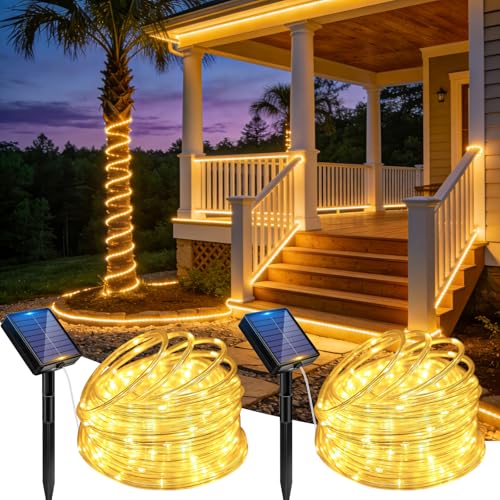
Total 52FT 120LED Solar Rope Lights Outdoor Waterproof, Warm White

Solar Firework Lights, 8 Pack 120 LEDs 8 Lighting Modes Solar Fairy Garden Lights

Solar Garden Lights Outdoor 4 Pack, 120LED Solar Starburst Twinkle Firework Lights
The Details Behind The Selections
Small porches and modest gardens usually get punished by rope lights that are either too long to manage or too dim to register after dark. The 26-foot Fairdeer solar rope, with 60 warm-white LEDs spread across a 20-foot lighted span and a 6-foot lead wire, threads neatly along a railing or around a young tree without leaving an awkward tail of slack.
Eight lighting modes give room to settle in for a quiet evening or shift into a more playful rhythm for a gathering. Since the panel charges during the day, there’s no outlet hunt or extension cord to trip over, and the waterproof housing shrugs off rain and morning dew. For tighter zones, this fits where longer ropes feel wasteful.
The Helpful Details
- 20-foot lighted length suits small focal spots without overloading the area.
- Eight modes include a steady-on setting, which most rope lights skip in favor of flashier patterns.
- Solar panel placement is flexible thanks to the extra lead wire, so a partly shaded yard still works.
- Warm white tone reads as ambient rather than utilitarian, which helps it disappear into a garden instead of standing out as decoration.
Things To Consider
- Only 60 LEDs across the rope means visible gaps on long, straight runs, where a denser pick like the 120LED Total 52FT would feel more continuous.
- Solar charging drops noticeably in heavy winter cloud cover, so a backup plan helps for off-season use.
Built With In Mind
Apartment dwellers, renters, or anyone decorating a single railing, small tree, or balcony who wants warm light with zero wiring.
A Better Fit Elsewhere
Anyone wrapping a long fence line or a full garden border gets more mileage from the Total 52FT 120LED Solar Rope Lights, which double the reach and LED count.
When a project stretches past a single railing and into a full fence or perimeter garden, a short rope quickly turns into a daisy chain of compromises. The Total 52-foot Fairdeer doubles the lighted length and the LED count compared to the 26-foot pick above, so the same warm-white wash that suits a small tree now reads cleanly across 40 feet of lit rope.
The setup stays simple because the solar panel still needs only one sunlit spot, and the same eight lighting modes carry over for familiar control. For larger yards, you may find the doubled LED density more forgiving on long, straight stretches where the 26-foot pick starts to look sparse. The waterproof build handles the same rain and dew as the smaller sibling.
Advantages To Know
- 40-foot lighted span covers most fence tops and garden borders without joining ropes.
- 120 LEDs keep the glow more uniform on long stretches, where fewer LEDs tend to leave dark gaps.
- Same eight modes and steady-on option as the shorter model, so switching between them feels consistent.
- Solar power means the panel does the work, which pays off on larger projects where running electricity gets expensive fast.
Points To Note
- Extra length adds storage hassle in off-seasons, and coiling 40 feet of rope cleanly takes a few minutes more than the smaller pick.
- Placement planning matters more, since a single shadowed panel location can dim the entire run.
Right Fit For
Homeowners with a fence line, long pergola, or wraparound garden bed who want one continuous run instead of multiple shorter ropes linked together.
Where A Sibling Pick Shines
Tighter spaces like a small balcony or single tree work better with the 26FT 60LED Solar Rope Lights, where the extra length here would simply pile up.
Rope lights hug edges and outlines, but they rarely create a focal point. The eight-pack firework-style stakes solve that by standing independently in a garden bed or along a walkway, each one radiating outward in a burst pattern that looks more like a celebration than a string.
With 120 LEDs split across eight stakes, the brightness spreads evenly without overwhelming a single corner of the yard. The eight lighting modes let the scene shift from a calm shimmer to something more animated. Stake installation requires no tools, and the waterproof build tolerates the same weather as the rope picks earlier in this list.
A Strong Showing
- Eight-pack layout creates an instant visual statement that rope lights cannot match alone.
- 120 LEDs distributed across stakes read brighter per square foot than a long rope in the same area.
- Stakes fit flower beds, pathway borders, and patio edges without draping hardware.
- Eight modes add variety for everything from weeknight dinners to outdoor parties.
Worth Bearing In Mind
- Stakes need soft or worked soil to seat properly, and rocky or heavily compacted ground slows installation.
- Unlike the rope picks above, these do not trace continuous lines, so outlining a fence or pergola calls for pairing with rope lights.
- Owners commonly report repositioning stakes after heavy rain loosens the soil around them.
Who It Suits Best
Gardeners and entertainers who want pathway lighting or a centerpiece burst effect rather than a continuous trim along a structure.
Swap It Out When
The Total 52FT 120LED Solar Rope Lights make more sense for outlining a long fence or pergola, where the stake format here cannot trace edges.
Not every yard wants eight light stakes competing for attention. The four-pack Fairdeer firework lights trim the same starburst effect down to a more restrained set, which works beautifully as a holiday accent without overpowering a small front yard or walkway.
Each of the four stakes carries its share of the 120-LED total, so the brightness per stake stays high while the overall scene reads as curated rather than crowded. The same eight lighting modes appear here, giving the same flexibility as the eight-pack for Halloween, Christmas, or a quiet summer evening.
What Stands Out
- Four-stake format suits smaller gardens and narrow walkways without visual clutter.
- Same 120-LED brightness split across fewer units keeps each stake vivid at night.
- Holiday framing makes the seasonal transition easy, from spooky October to festive December.
- Waterproof construction handles the same rain and frost as the larger eight-pack.
Room For Improvement
- Four stakes cover less ground than the eight-pack, so larger gardens may need additional lighting to feel complete.
- Like the eight-pack, soft soil is helpful for seating stakes properly, and rocky ground can complicate placement.
Made For
Shoppers decorating a modest yard, narrow pathway, or front-of-house display who want festive flair for Halloween and Christmas without a full landscape overhaul.
Look Elsewhere When
The Solar Firework Lights eight-pack suits anyone wanting more stakes and a denser spread across a larger garden or longer pathway.
What Matters Most Before Choosing Outdoor Fairy Lights
Power Source And Placement
Solar lights free you from outlets and extension cords, but they only work where the panel sees meaningful daylight. A spot that looks bright at noon might sit in deep shade by late afternoon, so panel placement often decides whether the lights glow until midnight or fade by dinner. Rope picks like the Fairdeer 26-foot and 52-foot use a lead wire so the panel can sit slightly apart from the lit section, which buys flexibility.
Format: Rope Versus Stake
Rope lights follow edges: railings, fences, pergolas, tree trunks. They trace shapes but rarely create a focal point. Stake-mounted lights like the two firework-style sets stand on their own and create bursts of light in a garden bed or along a path. Many yards actually use both formats together: rope for outlining structures, stakes for accenting beds.
LED Count And Density
More LEDs across a given length means a more even glow. The 60-LED rope reads adequately on a small loop but starts to look sparse on long, straight runs, where the 120-LED Total 52FT version keeps things uniform. For stakes, density per unit matters more than total count, since each stake stands alone.
Modes And Practicality
Multiple lighting modes sound like a flourish, but they matter for mood and for everyday versus entertaining. A steady-on setting is genuinely useful for relaxed evenings, while the flashier patterns earn their keep during parties or holiday windows. Waterproofing across all four picks here handles rain and morning dew, though submersion in puddles is a different matter.
Key Considerations Across These Picks
Common Shopping Slip Ups
The most frequent mistake is underestimating how much length a project needs, then ending up with a tangle of joined ropes that look uneven. Measure the run twice before ordering, and remember that rope lights include a lead wire, which adds length that is not lit. Another misstep is planting stakes in frozen or rocky soil that refuses to seat properly, leaving wobbly units after the first storm.
Where The Extra Money Goes
Higher counts and longer runs tend to cost more because of added LEDs, longer cabling, and larger solar panels that hold a fuller charge through longer nights. The four-pack versus eight-pack difference shows up in how many fixtures ship in the box, while the 26-foot versus 52-foot rope jump reflects doubled LED count and reach. For tight projects the smaller sets already deliver, so spending up only makes sense when the space genuinely calls for it.
Frequently Asked Questions
How long do solar fairy lights typically stay lit at night?
Most solar-powered outdoor fairy lights run somewhere between six and ten hours on a full charge, depending on panel size and how much direct sun they received during the day.
Can outdoor fairy lights handle rain and snow?
All four picks in this shortlist carry waterproof construction that handles typical rainfall and frost, though submersion in standing water is a separate concern that even rated units struggle with.
Are warm white lights better than multicolor?
Warm white tends to read as ambient and works across seasons without feeling tied to one holiday. Multicolor fits specific celebrations but can feel busy for everyday dinners.
Do I need to turn solar lights on and off manually?
Most solar lights include a small switch and a light sensor that handles dusk-to-dawn activation automatically, though the first setup usually requires a manual button press to wake the panel.
How do I clean and store solar fairy lights between seasons?
A soft, dry cloth handles panel dust, and a quick wipe along the rope or stake clears grime. Off-season storage in a dry container prevents tangling and protects the wiring from prolonged cold.