

Lighting a large outdoor space, whether a warehouse yard, a parking lot, or a commercial storefront, requires fixtures that hold up to weather, run for hours without complaint, and push enough lumens to make dark corners feel safe. The right commercial-grade flood light replaces several residential units and cuts maintenance trips for years.
I’ve spent time comparing the most common configurations in this category: small twin-packs for residential edges, mid-size wall packs with photocells, and full pole-mount area lights for commercial lots. What follows are six options worth a closer look, chosen for varied use cases and honest trade-offs.
The Main Contenders

HYPERLITE 30W Flood Lights Outdoor 2 Pack

Litezone 120W LED Wall Pack Light 2-Pack
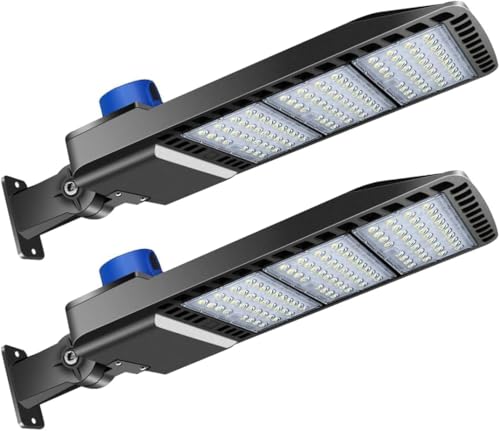
Juyace 2 Pack 300W LED Parking Lot Light

Juyace 2 Pack 480W LED Parking Lot Light
Leddictive 2 Pack 100W LED Flood Light

Juyace 3 Pack 300W LED Parking Lot Light
Meet The Standout Selections
The HYPERLITE 30W twin pack is the smallest fixture in this lineup, and that has real appeal for homeowners lighting a garage apron, a side yard, or a garden path. Each head pushes roughly 3,300 lumens at a 5000K daylight color temperature, which reads clean and crisp rather than warm or amber. A knuckle joint lets the head pivot and lock at the angle you want, and the housing carries an IP65 rating, meaning it’s sealed against dust and low-pressure water jets.
For someone replacing older halogen flood lights, the drop in wattage is the headline. Thirty watts per head draws less than a household lamp, yet throws a usable wash across a driveway or barn wall. Compared to the larger commercial fixtures further down this list, the HYPERLITE trades raw output for install simplicity.
Benefits That Matter
- Knuckle-mount joint pivots freely and locks without special tools, easing aiming during install
- IP65-rated housing shrugs off rain and dust in most climates
- 5000K daylight tone helps cameras and security sensors read motion clearly
- Twin-pack format means one purchase covers two sides of a building or yard
Points To Note
- At 30W per head, it underperforms for genuinely large commercial spaces
- The compact form factor may feel under-built on tall walls where wind load matters
Whose Property It Belongs On
Residential properties, small workshops, and homeowners upgrading aging halogen floods.
Look Elsewhere When
You need pole-mounted coverage for a real lot, in which case the Juyace 300W or 480W models make more sense.
The Litezone 120W wall pack is the pick for anyone who has watched a cheaper polycarbonate (a shatter-resistant plastic) lens turn yellow after a season outside. This fixture ships with a glass lens that holds its clarity over time, paired with a die-cast aluminum body that acts as a passive heat sink. Each head delivers around 18,000 lumens, which is genuinely a lot of light from a single wall-mounted unit.
The integrated photocell (a small light sensor that turns the fixture on at dusk and off at dawn) is the practical highlight. Property managers who don’t want to think about switching the lights on each night will appreciate the automation. Where the HYPERLITE above targets home edges, the Litezone is aimed at building exteriors, warehouses, and storefront back walls.
Useful Strengths
- Glass lens resists the yellowing that plagues cheaper plastic lenses over years of UV exposure
- Built-in dusk-to-dawn photocell removes a daily manual step
- 18,000 lumens per head covers wide wall sections and loading bays
- ETL listing gives commercial code inspectors one less concern
Honest Caveats
- Glass adds weight, so mounting surface and hardware should be rated accordingly
- Photocell placement matters; nearby ambient light from signs can confuse the sensor
Feature Snapshot
Right Fit For
Facility managers lighting warehouse exteriors, parking garages, and commercial storefronts.
Reach For A Different Pick When
You need pole-mounted area light rather than wall coverage, where the Juyace 300W unit is a stronger match.
The Juyace 300W steps into genuinely commercial territory. Each head pushes 36,000 lumens, which is the kind of output that used to require a 1000W metal halide (an older high-intensity discharge lamp) hanging from a tall pole. The fixture also ships with an adjustable bracket that rotates 180 degrees, so the same unit can throw light downward from a wall or outward from an existing pole arm.
A built-in dusk-to-dawn photocell means the lights stay off during bright midday sun and switch on automatically when they need to work. For small business owners, this combination of bracket flexibility, high lumen output, and automatic switching removes several headaches at once.
What Works In Its Favor
- 36,000 lumens per head replaces older high-wattage metal halide fixtures
- 180-degree adjustable bracket adapts to wall, arm, or pole mounting
- Built-in photocell handles dusk-to-dawn operation without timers
- Two-pack format suits matching installations on opposite sides of a lot
Trade Offs
- 300W draw per head demands a properly rated circuit and gauge wiring
- Heat output is significant; mounting height and ventilation matter for diode lifespan
Built With In Mind
Mid-size commercial yards, church parking areas, and small industrial sites needing wide coverage.
Swap It Out When
You want pole slip-fitter mounting (a slip-fitter is a bracket that slides over a pole and tightens with set screws for tool-free aiming) instead of wall mounting, in which case the Juyace 480W slip-fitter pack fits better.
The 480W pair from Juyace is built for spaces that punish anything less. Each head throws enough light for large parking lots, stadium perimeters, and shipping yards where you need uniform coverage without dark pockets. The bundled pair is matched at the factory for color and output, which avoids the patchwork look that creeps in when fixtures are ordered months apart.
The slip-fitter mount is the practical difference versus the wall-mount version above. Slip-fitters slide over a standard round pole and tighten down, making the same hardware re-deployable if you move operations later. For property managers standardizing on a pole-based layout, this is the cleaner pick.
What Stands Out
- Matched pair means consistent 5000K color across the entire lot
- High-wattage output covers expansive areas from a single pole position
- Slip-fitter mount is reversible if your site layout changes
- Two-head bundle simplifies quote and procurement for new builds
Worth Bearing In Mind
- 480W per fixture requires heavy-gauge wiring and a dedicated circuit
- Brightness at ground level can spill onto neighboring properties without proper aiming
Feature Snapshot
Who Should Grab It
Large-lot operators, commercial property developers, and sports facility managers needing pole-mount lighting.
Consider Something Else When
Your site needs wall-mounted fixtures rather than pole installations, where the Juyace 300W wall-mount version is more applicable.
The Leddictive 100W sits in a useful middle spot. Each head puts out 10,000 lumens at a cool 6000K color temperature, which is noticeably brighter and cooler than the other fixtures in this roundup. The die-cast aluminum shell has long cooling fins across the back, designed to pull heat away from the diodes during long dusk-to-dawn runs.
Contractors and serious DIYers tend to gravitate toward this style. The output is enough to flood a work site, a barn interior, or a backyard project area, but the form factor stays manageable. Compared to the Litezone wall pack above, the Leddictive leans toward portable or temporary placement rather than permanent building wiring.
Standout Benefits
- 10,000 lumens per head balances power with manageable heat
- Finned aluminum housing pulls heat away from diodes for longer life
- Cooler 6000K tone reads as daylight, helpful for detail work
- Twin-pack ships ready to cover opposing walls or two work zones
Practical Considerations
- Cool 6000K tone can feel harsh on the eyes compared to 5000K fixtures
- Larger heat sink footprint means the housing is bulkier than smaller floods
Feature Snapshot
Best Suited To
Contractors, workshop owners, and homeowners running outdoor projects needing portable or semi-permanent floods.
A Better Fit Elsewhere
For permanent building exteriors where a dusk-to-dawn photocell matters, the Litezone 120W wall pack is the stronger fit.
The three-pack Juyace 300W takes the same per-fixture spec as the wall-mount version earlier in this list and bundles three matched units for a more complete installation. With three matched heads at the same color temperature, a property manager can light an entire lot entrance, perimeter, or small parking field without mixing batches or chasing color consistency later.
The slip-fitter mount confirms the intended use: round pole installation at standard parking-lot heights. For new builds or full re-lighting projects, the three-pack format tends to be the cleanest procurement path, since you get matched fixtures in one shipment.
Well-Handled Touches
- Three matched fixtures eliminate color and brightness mismatches between units
- 300W per head provides strong output without the heaviest commercial power draw
- Slip-fitter mounting supports standard round pole sizes
- Single shipment simplifies quotes, invoicing, and warranty tracking
A Few Limitations
- Three units in one box means heavier shipping and a more involved install crew
- 300W per head still demands proper circuit planning across all three fixtures
Perfect Match For
New commercial builds, full parking-lot refreshes, and property managers standardizing on one pole-mount fixture.
Not Your Match When
Only one or two fixtures are needed, in which case the Juyace 2 Pack 300W or 480W is the smaller, more practical order.
What Matters Before Choosing Outdoor Commercial Flood Lights
Match Output To The Actual Space
The lumen count on the box sounds impressive, but it only matters relative to the area you’re lighting. A 3,300-lumen head covers a residential side yard comfortably, while a 36,000-lumen unit is the right scale for a real commercial lot. Pick the lumen figure that fits the square footage you need to flood, not the highest number you can find.
Decide Between Wall Mount And Pole Mount Early
Wall-mounted fixtures work well on building exteriors and barn sides, where a fixed surface is available. Pole-mounted slip-fitter fixtures suit open lots, since they raise the light source higher and spread coverage further. Choosing the wrong mounting style means reordering hardware later, so settle this before the electrician arrives.
Look For Photocell And Sensor Integration
A dusk-to-dawn photocell automates on/off cycles based on ambient light, which removes a daily task and prevents lights from running in daylight. In commercial settings where lights are left on by mistake, that automation alone justifies the upgrade over a manual switch.
Check Heat Dissipation And Housing Quality
Die-cast aluminum housings with cooling fins pull heat away from the LED diodes, extending their service life. A sealed housing with a proper IP rating (a two-digit ingress protection code, where the first digit rates dust and the second rates water resistance) keeps moisture out over years of weather. The cheapest plastic-bodied units save money upfront but tend to fail sooner in tough climates.
Key Considerations Across These Picks
Pitfalls Shoppers Hit
The most common mistake is buying the highest lumen count available and assuming it solves every problem. Without proper aiming and mounting height, an overpowered fixture creates glare and dark shadows just beyond its reach. A second trap is ignoring mounting hardware, since a fixture rated for 30W handles wall screws fine, while a 480W pole head demands the right slip-fitter bracket and pole rating.
Where The Extra Money Goes
Higher-tier commercial fixtures earn their price through three upgrades. First, matched diode batches keep color consistent across the entire installation. Second, die-cast aluminum housings with cooling fins extend diode life well past the cheap plastic units. Third, integrated photocells and dusk-to-dawn sensors remove manual switching, which adds up to real labor savings on large lots over time.
Frequently Asked Questions
How Many Lumens Do Commercial Flood Lights Need?
Commercial flood lights typically start at around 10,000 lumens per fixture for building exteriors and scale up to 36,000 lumens or more for parking lots. The right figure depends on mounting height, beam angle, and how much area each fixture needs to cover.
What Is The Best Color Temperature For Security Lighting?
Most security and commercial flood lights use a 5000K daylight color temperature, which reads as clean, neutral white and helps cameras capture clear footage. Cooler 6000K options appear brighter to the eye but can feel harsh at close range.
Can LED Flood Lights Stay On All Night?
LED flood lights with a dusk-to-dawn photocell can stay on all night automatically, switching off when morning ambient light returns. Without a photocell, they need a manual switch or external timer to avoid running needlessly in daylight.
What Does IP65 Mean On A Flood Light?
IP65 is an ingress protection rating where 6 means the housing is fully dust-tight and 5 means it resists low-pressure water jets from any direction. For most outdoor commercial installations, IP65 is the practical baseline.
Are Slip Fitter Mounts Standard On All Light Poles?
Slip fitter mounts are standard on most round commercial light poles, though pole diameter varies. It’s worth checking the slip-fitter’s supported range before ordering to confirm a clean fit with existing poles on site.