

Houseplants brighten a room, but most living spaces just don’t offer enough natural light to keep them thriving year-round. A full spectrum LED grow light fills that gap by mimicking the wavelengths plants use for photosynthesis, which makes it easier to start seedlings, keep leafy foliage green through winter, or grow herbs on a kitchen counter. I put together this list to help you match the right fixture to your space, whether you’re working with a tiny apartment shelf or a dedicated 4×4 grow tent.
Your Options, Compared

Spider Farmer SE1500 LED Grow Light 150W App-Controlled
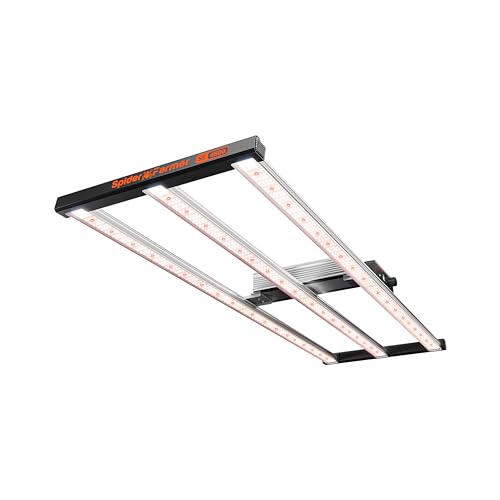
Spider Farmer SE4500 LED Grow Light 320W App-Controlled

HLG 600 Rspec FR 600W Quantum Board Grow Light

VIIVUU Clip-On Plant Grow Light

Soltech Aspect Gen 2 Pendant Grow Light

Spider Farmer SE3000 LED Grow Light 300W App-Controlled
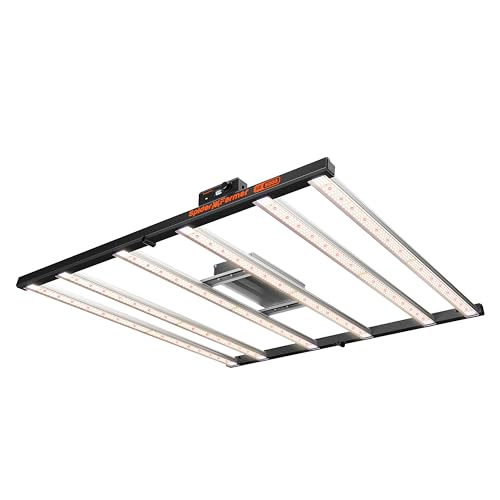
Spider Farmer SE5000 LED Grow Light 480W App-Controlled

Kullsinss 16in Grow Light Strips 2-Bar 120 LEDs

Kullsinss 16in Grow Light Strips 4-Bar 240 LEDs

Spider Farmer SE7000 Commercial LED Grow Light
Meet The Standout Selections
The Spider Farmer SE1500 is the smallest bar-style fixture in this Spider Farmer lineup, and that makes it my usual starting recommendation for anyone stepping into indoor growing for the first time. Its 150W draw is gentle on a standard household circuit, and the bridgelux diodes push a solid PPF for the wattage, which means herbs and leafy greens stay compact instead of stretching.
Pair the fixture with the Spider Farmer app and you can dial sunrise-to-sunset schedules from the couch, or hand the dimmer knob to a partner who’s allergic to another login. For most 2×2 tents and small shelving racks, this is the sweet spot between power and practicality.
Why It Works Well
- Bar-style spread keeps light even across a 2×2 footprint, so seedlings on the edges don’t lag behind the center
- App control removes the daily on-off scramble, which matters on busy mornings
- Runs cool enough that most closets don’t need extra venting
- Compact form fits shelves and tents where larger fixtures would cramp the canopy
Things To Consider
- A single unit is light-duty for flowering plants with heavy fruit loads
- The app depends on stable home Wi-Fi, so a flaky router may frustrate scheduling
Who It Suits Best
New indoor gardeners running a small 2×2 tent, a kitchen herb shelf, or a propagation station will find this light easy to live with.
Consider Something Else When
The Spider Farmer SE4500 LED Grow Light is a better match if you’re planning a 2×4 flowering tent and need deeper reach.
Step up to the SE4500 and you’re getting roughly double the output of the SE1500, with a three-bar layout that’s been engineered to keep the corners of a 2×4 tent from going dim. The bridgelux diodes push 913 µmol/s of photon output at 320W, which is a serious number for hobby growers chasing full-cycle flower in a standard tent.
I think of this fixture as the workhorse middle child of the Spider Farmer lineup. It handles both veg and flower stages without forcing you to swap lights, and the app control gives you the same scheduling flexibility you’d find on the smaller SE1500.
Real Benefits
- Edge-to-edge coverage across a 2×4 tent removes the patchy yield you sometimes see with single-panel lights
- App-based scheduling saves a daily walk to the tent, which matters during long flowering cycles
- Output is high enough to push full-cycle flowers, not just leafy greens
- Runs cooler than older HPS setups, reducing the load on tent ventilation
Trade Offs
- At 320W, this fixture pulls real current and may share a circuit with other gear
- Larger than the SE1500, so tight closet setups may feel cramped
Made For
Hobbyists running a 2×4 tent from seed to flower who want one fixture that covers every stage without swapping hardware.
Look Elsewhere When
The HLG 600 Rspec FR is the smarter buy if your tent is a full 4×4 and you need heavier photon output.
HLG’s 600 Rspec FR is the fixture I’d suggest for a dedicated 4×4 flowering room. It’s a quantum board design with white-light diodes tuned for horticulture, plus far-red added for the flowering stretch response. The 600W draw puts out 1529 PPF at a competitive 2.60 µmol/J, which is the kind of efficiency number serious growers look at first.
Compared to the Spider Farmer SE4500, this HLG trades app convenience for raw photon density and deeper canopy penetration. The dimmer is analog, not app-based, and the board runs on standard 120V outlets.
Real-World Strengths
- Pushes 1529 PPF, strong enough to drive heavy flower sets deep into the canopy
- Quantum board form factor spreads light evenly across the full 4×4 footprint
- Far-red spectrum nudges plants into the flowering stretch response, often improving yields
- ETL certification gives commercial growers a path to code-compliant installs
Honest Caveats
- No app control, just a manual dimmer knob on the driver
- 600W is a heavy electrical load, so circuit sharing should be checked
- Quantum boards run hot; plan tent ventilation around the fixture
Right Fit For
Experienced growers running 4×4 flowering tents who want lab-grade efficiency without paying commercial-tier prices.
Swap It Out When
The Spider Farmer SE5000 LED Grow Light makes more sense if you want app scheduling along with 4×4 coverage.
The VIIVUU clip-on light is built for the apartment-dweller who owns one sad fiddle leaf fig and a windowsill herb garden. It clamps onto a pot rim or slips into the soil, depending on your setup, and it doesn’t try to be a tent fixture. The whole point is single-plant flexibility.
Stack two or three of these around a bookshelf and you have a working propagation wall without rewiring anything. Versus the larger Spider Farmer units, this is a different category entirely: light-duty, no app, no dimmer complexity.
Notable Upsides
- Clamp and soil-stake options let you redirect light without permanent mounting
- Tiny footprint fits crowded apartments where a tent would be absurd
- Plug-and-play setup takes about a minute
Practical Considerations
- Light output is too low for serious flowering or full-cycle veg
- Clamp can leave marks on thin pot rims, so padded edges are worth checking
Best Suited To
Apartment dwellers and beginners nursing a few houseplants through dim winters without investing in a tent.
Not Your Match When
Any of the Spider Farmer bar fixtures will serve you better if you’re growing vegetables or running a full tent.
The Soltech Aspect Gen 2 hangs like a designer pendant and grows plants like a real fixture. That sounds like marketing fluff, but the warm-white natural light output and clean cord make this the rare grow light that doesn’t ruin a living room aesthetic. Compared to the utilitarian look of the Spider Farmer bar lights, this one is meant to be seen.
The 110% boost in plant-usable light over the original Small Aspect puts it in the same conversation as serious horticultural fixtures, just dressed for company.
Useful Strengths
- Pendant form factor hides the grow-light identity in shared living spaces
- Warm-white light output keeps rooms cozy rather than purple-tinted
- High-output diode count handles mid-sized floor plants and hanging baskets
- Dimming is built into the fixture, no separate controller needed
Where It May Fall Short
- Pendant mounting requires a ceiling hook or hardwire, so renters should plan ahead
- Coverage area is narrower than a 2×2 bar fixture, limiting canopy size
Who Will Love This
Plant parents who care as much about interior design as they do about healthy leaves, especially in open-plan living rooms.
Reach For A Different Pick When
The Spider Farmer SE1500 LED Grow Light delivers broader coverage if you’re working with a plant shelf rather than a statement piece.
The SE3000 sits in a useful gap between the SE1500 and the SE4500, and that’s exactly where many home growers actually live. At 300W it drives 826 µmol/s through bridgelux diodes, which is enough photon output for a 3×3 flowering footprint without overdoing it.
If you’re scaling up from the entry-level SE1500 but don’t need the full 2×4 reach of the SE4500, this is the natural middle step. Bar-style construction keeps the light even from edge to edge.
The Value In It
- Balances wattage and footprint for mid-size tents that would otherwise be over- or under-lit
- App-driven scheduling carries over from the smaller SE1500, so there’s no learning curve
- Bridgelux diodes run efficiently, lowering long-term power costs
Points To Note
- 300W is a real load; smaller circuits may struggle when combined with heaters or fans
- Coverage doesn’t quite stretch to a full 4×4 without dimming the corners
Perfect Match For
Growers running a 3×3 tent who want a clean upgrade from a starter light without jumping to commercial wattage.
Skip It When
The Spider Farmer SE5000 LED Grow Light covers a full 4×4 if you’ve already outgrown the 3×3 space.
The SE5000 is the fixture I’d reach for in a 4×4 tent where I wanted app control and high photon density. At 480W it puts out 1420 µmol/s, and the bar layout pushes light wall-to-wall without obvious dead spots.
Compared to the HLG 600 Rspec FR, this Spider Farmer trades a little raw output for app convenience and a dimmable digital display. For a 4×4 tent used full-cycle, that’s a meaningful trade.
What Pays Off
- Wall-to-wall coverage across a 4×4 tent means even flowering sets at the corners
- Digital display and app give precise dimming without walking to the tent
- Bridgelux diode density supports heavy flowering without harsh hotspots
Possible Compromises
- 480W pulls significant current; circuit planning matters in older homes
- Larger fixture body means heavier mounting hardware and stronger hanging points
Feature Snapshot
Built With In Mind
Serious home growers running 4×4 tents full-cycle who want app control alongside heavy-hitting photon output.
Where A Sibling Pick Shines
The HLG 600 Rspec FR is worth considering if far-red spectrum and analog control suit your growing style better.
The Kullsinss 2-bar strips are the right tool for under-shelf seed starting and herb racks. Each strip packs 120 LEDs across two bars, and the smart controller offers five dimming levels plus three spectrum modes. That’s a lot of flexibility for a small-format fixture.
Versus the Spider Farmer bar lights, these strips don’t push enough light to flower dense canopies, but they shine for vegetative starts and kitchen herbs.
A Favorable Mix
- Five-level dimming and three spectrum modes cover most seedling and herb needs
- Strip format fits under standard wire shelving without custom mounting
- Smart controller automates on-off cycles, which helps during busy weeks
Details To Watch
- Limited photon output rules out serious flowering or fruiting
- Strip mounting hardware may not fit unusually thick shelves without adapters
Whose Shelf It Belongs On
Seed-starting gardeners and indoor herb growers working with wire racks or narrow shelving.
A Better Fit Elsewhere
The Kullsinss 4-bar strip set covers wider shelves when a single 2-bar setup leaves edges dim.
The 4-bar version of the Kullsinss strips doubles the diode count to 240 LEDs across four bars, which makes it a much better match for wider shelving and multi-tier plant walls. The upgraded timer offers 6, 12, and 16-hour cycles that align well with both short-day and long-day plant preferences.
Stack one of these over a four-foot shelf and you have a real indoor growing wall without a tent.
Where It Helps
- Four-bar layout covers wider shelves where two bars leave dim edges
- Multiple timer presets match common photoperiod needs for herbs and houseplants
- Full-spectrum output supports plants at most growth stages
Some Limits To Know
- Still underpowered for flowering heavy fruit or dense buds
- Power adapter and daisy-chaining cords need tidy cable management on busy shelves
Who Should Grab It
Plant collectors with multi-shelf setups who want one strip configuration that handles a wider footprint than the 2-bar model.
Another Choice May Suit
The Spider Farmer SE1500 LED Grow Light gives you tent-grade intensity if you’re ready to step beyond shelving into a proper enclosed grow space.
The SE7000 is the commercial-tier Spider Farmer, and it isn’t subtle. At 730W it pumps out 2146 µmol/s through a six-bar layout, blanketing a 5×5 canopy with even light and Osram red diodes that push flowering hard. If you’re running a serious multi-tent room or small commercial operation, this is the fixture that makes the math work.
The gap between the SE5000 and the SE7000 is real, both in wattage and in physical scale. Make sure your ceiling height and circuit capacity are ready before mounting.
Points In Its Favor
- 6-bar layout and 730W drive full-cycle flowering across a full 5×5 footprint
- Osram red diodes enhance the flowering spectrum beyond standard bridgelux-only fixtures
- App control scales across multiple fixtures, useful for commercial rooms
Worth Bearing In Mind
- 730W demands a dedicated circuit in most residential setups
- Fixture weight and size need solid ceiling mounting and adequate vertical clearance
Quick Facts
The Right Fit
Small commercial growers and serious multi-tent operators who need 5×5 canopy coverage and full-cycle flowering power.
Where Another Pick Suits Better
The Spider Farmer SE5000 LED Grow Light is the better residential pick if your room runs on a standard 120V circuit.
Picking The Right Full Spectrum Grow Light For Your Setup
Match Wattage To Your Growing Space
Wattage drives photon output, and photon output drives plant performance. A 150W fixture like the Spider Farmer SE1500 handles a 2×2 footprint comfortably, while a 730W commercial fixture like the SE7000 needs a 5×5 space to spread its output. PPF (photosynthetic photon flux) tells you how much usable light actually reaches the canopy, so look at that number alongside raw wattage. µmol/J (micromoles per joule) measures efficiency: higher numbers mean more plant-usable light per watt of electricity, which lowers long-term power costs.
Think About How You Control The Light
App control sounds like a luxury until you’ve walked to a tent three times a day to flip a switch. Wi-Fi-driven fixtures like the SE1500 and SE7000 handle sunrise-to-sunset scheduling without manual effort. Manual dimmers, like the analog knob on the HLG 600 Rspec FR, work fine for growers who want fewer connected devices in their home.
Match The Form Factor To Your Room
Pendant fixtures like the Soltech Aspect Gen 2 disappear into a living room. Bar-style fixtures like the Spider Farmer SE lineup live happily in tents. Strip lights like the Kullsinss models slip under wire shelving. Clip-on lights like the VIIVUU handle a single plant on a windowsill. Choose the form factor that fits where you actually grow, not where you wish you grew.
What Separates Premium Picks From Basic Ones
Common Buying Pitfalls In The Grow Light Category
Underbuying on wattage is the most common mistake. A 150W light looks tempting until seedlings stretch toward the corners of a 2×4 tent and you’ll wish you had the SE4500 instead. The flip side is overbuying, where a 730W fixture in a closet wastes electricity and burns tender foliage. Match wattage to footprint, and ignore marketing that promises one fixture fits every tent size.
Where The Higher Price Actually Helps
Premium fixtures earn their higher price with better diode efficiency, sturdier drivers, and longer service life. A quantum board like the HLG 600 Rspec FR delivers more photons per watt than budget strips, which pays back the higher cost through electricity savings over years of use. Commercial-grade fixtures also include safety certifications and better thermal management, which matters when a light runs 18 hours a day, every day.
Frequently Asked Questions
What Does Full Spectrum Actually Mean For Plants?
Full spectrum lights aim to mimic natural sunlight by including both blue wavelengths, which support vegetative growth, and red wavelengths, which drive flowering and fruiting. For most indoor gardens, full spectrum covers everything from leafy herbs to flowering plants without needing to swap bulbs.
How Far Should A Grow Light Hang Above The Canopy?
Most LED bar fixtures hang 12 to 24 inches above the plant canopy, depending on wattage. Higher-wattage commercial lights like the SE7000 need more clearance to prevent light burn, while dimmable strips can sit closer to seedlings.
Do I Need A Special Outlet Or Circuit For These Lights?
Most residential LED grow lights run on standard 120V outlets. Higher-wattage fixtures like the SE5000 and SE7000 pull enough current that a dedicated circuit is wise, especially if you share the breaker with heaters, fans, or other tent gear.
Can I Use These Lights For Vegetables Or Just Houseplants?
Yes, full spectrum LED fixtures work for herbs, leafy greens, tomatoes, and houseplants alike. Wattage and coverage determine what you can grow: small clip-ons handle single herbs, while 4×4 tent fixtures support full vegetable cycles.
How Long Do LED Grow Lights Typically Last?
Quality LED fixtures from brands like Spider Farmer and HLG commonly last 50,000 hours or more under normal use. That translates to several years of daily growing before diode output meaningfully drops, though running lights at full intensity shortens that lifespan compared to dimmed operation.
The Takeaway
The right full spectrum LED grow light depends less on raw specs and more on your space. Small apartments do well with clip-ons or a single SE1500, while dedicated 4×4 tents benefit from the HLG 600 or SE5000. Match wattage to footprint, choose a form factor that fits your room, and you’ll have a setup that keeps plants happy through every season.