

I walk my dog every evening, and nothing beats coming back to a softly glowing porch that switched itself on without a single thought. That’s the whole promise of dusk till dawn outdoor lights: a built-in photocell (a small light-sensing switch) watches the sky for you, then clicks the fixture on at sunset and off again at sunrise. Choosing the right setup matters more than it looks, though, because brightness, beam shape, and build quality vary wildly between a $20 bulb swap and a commercial wall pack.
The list below mixes Edison-style filament bulbs, decorative wall lanterns, and serious security-grade wall packs so you can match the right product to the right spot. I’ve grouped them by what they actually do in real life, not just what they look like on a spec sheet.
The Essentials At A Glance
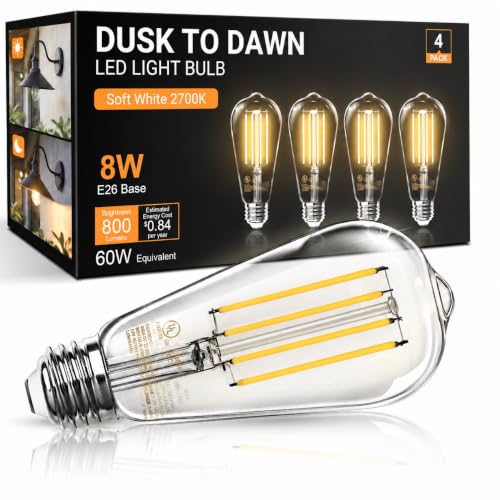
TJOY 4 Pack Dusk to Dawn ST58 Edison Bulbs 2700K

TJOY 2 Pack Dusk to Dawn ST58 Edison Bulbs 3000K

TJOY 4 Pack Dusk to Dawn ST58 Edison Bulbs 5000K
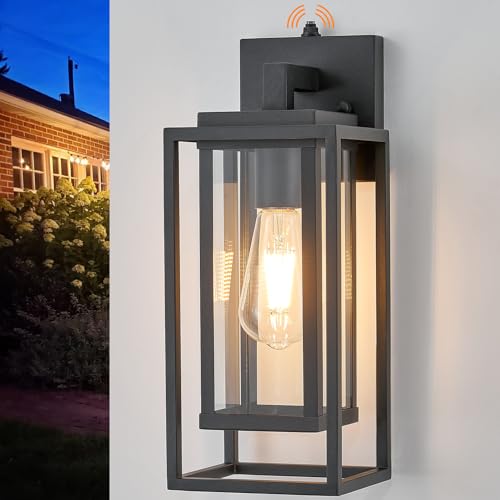
ZMKMOK 14″ Double Cage Outdoor Wall Lantern

OPAXIS 2PC Black Dusk to Dawn Porch Light Fixtures
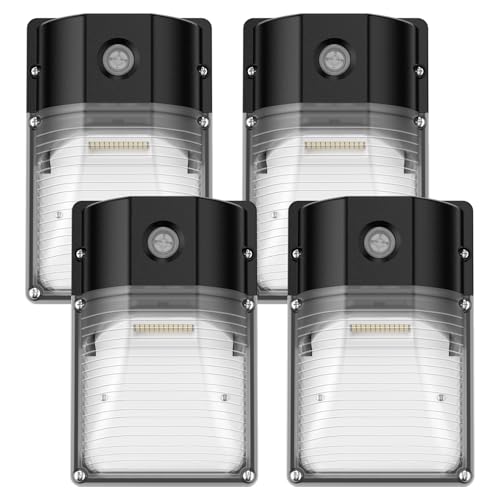
JC-LGL 30W LED Wall Pack 3600LM 5000K (4 Pack)

JC-LGL 30W LED Wall Pack 3600LM 5000K
Taking A Closer Look At The Options
If you already have a string of outdoor lanterns or a couple of porch sconces you actually like, swapping the bulbs is the cheapest path into automatic lighting. The TJOY 4-pack uses an ST58 Edison shape, a slender teardrop silhouette with visible “filament” LED wires inside, in a soft 2700K warm white. The integrated photocell reads only sunlight, so other fixtures nearby won’t trick it into staying dark.
I think of this pack as the easiest upgrade for renters and older homes. No rewiring, no new fixtures to mount, and the warm color temperature flatters wood doors, brick, and stained porches far more than a stark daylight bulb would.
Advantages To Know
- Edison-style filament look elevates plain fixtures without buying new hardware.
- 2700K warm white reads inviting at a front entry rather than institutional.
- Four-bulb pack covers most small homes with spares left over.
- Photocell responds to sunlight alone, reducing false triggers from porch floods.
Points To Note
- Output is modest compared with wall packs, so dark driveways stay dim.
- Bulbs depend on your existing fixtures being weather-sealed and in good shape.
- Glass enclosures and clear-glass sconces make the warm glow feel quite bright at close range.
Feature Snapshot
Best Suited To
Homeowners who want a soft porch glow and already own fixtures they like.
Swap It Out When
You need serious coverage for a long path or a dark driveway, in which case the JC-LGL 30W LED Wall Pack brings real brightness.
For one fixture or a tight budget, this 2-pack at 3000K hits a useful middle ground between the warm 2700K sibling above and a cool daylight tone. The slight extra brightness at 3000K reads cleaner against pale siding and stone, where a 2700K bulb can wash out and look muddy at a distance.
Compared with the 4-pack, this option suits a single garage sconce or a small apartment balcony where you only need to automate one or two sockets. The shape is identical, so swapping between the two SKUs costs nothing in fixture compatibility.
A Few Highlights
- Two-bulb count avoids buying extras you’ll store in a drawer forever.
- 3000K tone offers a touch more clarity than 2700K without going cold.
- Same Edison filament aesthetic as the 4-pack for a consistent look.
Trade Offs
- Limited to a single fixture unless you buy multiple packs.
- Still a low-lumen bulb, so security use is out of scope.
- Visibility of the internal filaments may bother folks who prefer a clean solid glow.
Who Will Love This
Apartment dwellers with a single balcony light who want hands-free automation.
Reach For A Different Pick When
You want symmetric lighting flanking a doorway, in which case the OPAXIS 2PC Porch Lights gives you a matched set already.
Same Edison hardware as pick #1, but with a 5000K daylight output that turns a porch into something closer to a work zone. I find this color temperature helpful around garden sheds, workshops, and side yards where you need to actually see what you’re doing rather than just create ambiance.
The aesthetic stays decorative, which is the draw. Most daylight outdoor bulbs come in floodlight shapes that scream “utility.” This one keeps the vintage filament look while throwing cooler, sharper light onto steps and paths.
What Earns Its Place
- 5000K output improves visibility on stairs, paths, and lock areas.
- Four-bulb pack handles side and rear entries at once.
- Filament styling avoids the harsh floodlight look common at this color temperature.
Honest Caveats
- Daylight tone reads colder against warm-tone wood and can wash out landscaping colors.
- Not strong enough on its own to serve as a security light.
- Brightness at the bulb level depends heavily on the fixture’s reflector design.
Right Fit For
Shoppers prioritizing visibility over warmth, especially around utility doors and sheds.
Look Elsewhere When
You want decoration and warmth on a front porch, where the 2700K version above reads more inviting.
This is the first fixture on the list rather than a bulb, and it shows. The 14-inch double-cage lantern leans farmhouse and craftsman, with a clear tempered-glass panel and a metal frame treated for rust resistance. A built-in photocell handles the on-and-off cycle, so there’s no switch to remember.
It targets homeowners who want the fixture itself to be a design feature, not just a holder for a bulb. The trade-off shows up in the install: this is a hardwired wall mount, not a screw-in swap, so plan on basic electrical work or a handyman visit.
Benefits That Matter
- Double-cage design adds architectural weight to plain exterior walls.
- Tempered glass protects the bulb area and resists ordinary impact better than standard glass.
- Built-in photocell means no separate sensor to mount or wire.
Small Caveats
- Hardwired installation takes more effort than swapping a bulb.
- Single fixture means you’ll likely want to buy multiples for symmetry.
- Decorative styling may clash with modern or minimalist exteriors.
Quick Facts
Who Should Grab It
Homeowners refreshing curb appeal on a craftsman, farmhouse, or transitional-style home.
Not Your Match When
You want a matched pair out of the box, since the OPAXIS 2PC set arrives ready to flank a doorway.
Two fixtures in one box solves the single biggest headache in entryway lighting: matching sconces that actually match. The black finish reads modern and farmhouse-friendly, and the integrated photocell means no app, no timer, and no extra wiring beyond the standard junction box.
You may find the styling simpler than the ZMKMOK lantern above, which is a strength or a weakness depending on your home’s architecture. For contemporary or transitional exteriors, the cleaner silhouette tends to land better than a cage design.
Where It Helps
- Two-pack resolves the symmetry problem on most front entries.
- Photocell is built in, so there’s no separate sensor box to mount.
- Black finish pairs easily with common trim palettes.
Practical Considerations
- Black finish shows water spots and dust more visibly than bronze or white.
- Hardwired install requires basic electrical comfort or professional help.
- Style skews contemporary, so traditional homes may prefer the ZMKMOK lantern.
Made For
Homeowners redoing an entryway who want two coordinated fixtures without buying singles twice.
Consider Something Else When
You want a vintage farmhouse look, since the ZMKMOK double-cage lantern suits that style better.
Step out of the decorative aisle and into the work-light section. The JC-LGL 30W wall pack delivers 3600 lumens per fixture at a 5000K daylight tone, with an IP65 rating (a standard that means dust-tight and resistant to water jets) for weather exposure and an ETL safety certification. The pre-punched mounting plate design is meant to shorten install time.
Four units make sense for someone lighting a long driveway, a barn, a multi-bay garage, or a side yard that’s currently a black pit after dark. Compare that to the OPAXIS fixtures, which are decorative accents; this is functional security lighting.
The Case For It
- 3600 lumens per unit handles wide coverage areas without supplemental floods.
- IP65 rating supports exposed mounting on exterior walls and eaves.
- Four-pack pricing covers a property perimeter in one purchase.
- Pre-punched junction plate shortens wiring time versus traditional knockout installs.
Things To Consider
- Industrial look clashes with most residential architecture.
- 5000K daylight tone reads harsh on a patio meant for relaxing.
- Hardwired install is non-negotiable and may need a junction box upgrade.
Technical Sheet
Built With In Mind
Property owners lighting a long driveway, a workshop wall, or a multi-bay garage where brightness matters more than curb appeal.
A Better Fit Elsewhere
Residential porches meant for sitting and conversation, where the OPAXIS twin fixtures feel more appropriate.
Same JC-LGL hardware as the 4-pack above, but sold one at a time. That makes this the right pick when you only have one problem spot to fix, like a single dark corner of a garage, a back stairwell, or a side gate that’s hard to see from the house.
I think of this as the targeted fix. Buying a 4-pack to light one spot is wasteful, and the single-unit listing keeps the install simple for homeowners who just need one heavy-duty fixture rather than a full perimeter overhaul.
Reasons It Performs
- Single-unit purchase avoids overbuying for one coverage gap.
- Same 3600-lumen output and IP65 rating as the multi-pack above.
- Photocell triggers reliably without timer programming.
Soft Spots
- Light is harsh and unmodulated, so it can spill onto neighboring windows.
- Industrial aesthetic doesn’t blend with most home facades.
- Wall pack beams are wide and not ideal for narrow path lighting.
Feature Rundown
Whose Shelf It Belongs On
Homeowners with one identified dark zone who want a heavy-duty fix without committing to a four-pack.
Where A Sibling Pick Shines
You have multiple dark spots to handle, in which case the 4-pack version above lands cheaper per fixture.
What Matters Before You Choose Dusk Till Dawn Outdoor Lights
Start with the role the fixture plays, not the spec sheet. A bulb swap in an existing lantern and a 30W wall pack solve completely different problems, even though both technically “auto-on at night.” I think of it in three layers: decorative accents for the front entry, workhorse lighting for paths and security zones, and targeted fixes for a single dark corner.
Color temperature shapes the mood more than most shoppers realize. Anything in the 2700K to 3000K range reads warm and residential, which suits porches and sitting areas. The 4000K to 5000K range reads crisp and modern, which suits security, workshops, and side yards. Mixing them on the same facade tends to look uneven, so pick a tone and stick with it across the front of the house.
Lumens (a measure of total visible light output) and beam shape decide whether you actually solve the dark-spot problem. A 300-lumen decorative bulb next to a dark driveway does nothing useful at midnight. For real coverage, look at wall packs in the 3000+ lumen range with a broad flood beam, not a tight spot beam.
Build quality and weather rating matter most for hardwired fixtures. An IP65 rating is the baseline I’d accept for anything wall-mounted in the open, and metal frames with anti-rust treatment tend to age better than painted steel in coastal or humid climates.
Key Considerations Across These Picks
Where Shoppers Go Wrong
The most common slip is buying a beautiful decorative lantern, mounting it where a security light belongs, and then wondering why the driveway stays dark. Match the fixture’s job to the fixture’s output. The other trap is ignoring the photocell’s behavior near other lights. Sensors that pick up stray porch floods may never trigger, so install location matters as much as the bulb itself.
Where The Extra Money Goes
Higher-tier wall packs earn their cost through heat dissipation, driver quality, and weatherproofing, not just brighter LEDs. A cheaper 30W unit may hit the same lumen number on paper but fade faster and fail at the first big storm. The upgrade is worth it on any fixture mounted high or hard to reach, since swapping a failed unit off a two-story wall costs more in time than the price difference between tiers.