

Anyone who has ever tried to fix a car at dusk, run wiring in a basement, or finish drywall after sunset knows the frustration of juggling a phone flashlight in one hand while working with the other. I’ve talked to plenty of weekend warriors and contractors who treat good light as essential as good tools. The category has grown well beyond bare-bulb clamp lights, so I pulled together nine picks worth a serious look. Some plug in, some run on batteries, and a few do both, but all of them solve the same stubborn problem: getting clean, usable light exactly where your project needs it.
A Closer Look At The Lineup
GUWELL 22000 Lumen Work Light with 3 Adjustable Heads and Tripod Stand

DEWALT 20V MAX LED Work Light (DCL050)

JC-LGL 150W 18000LM LED Temporary Work Light
GUWELL 22000 Lumen Work Light with 2 Adjustable Heads and Tripod Stand

Milwaukee M12 Underbody Light

JC-LGL 100FT LED Construction String Light with 10 Bulbs

GUWELL 22000 Lumen Work Light 2-Pack with 3 Adjustable Heads

JC-LGL 100W 12000LM LED Temporary Work Light
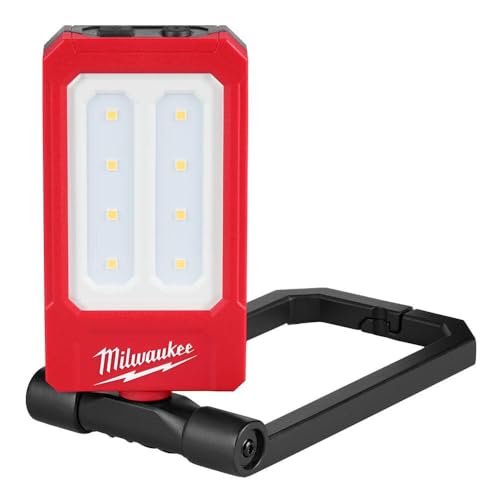
Milwaukee Low-Profile Magnetic Task Light
When the project is bigger than a workbench, the GUWELL three-head tripod feels like the right scale of tool. The IP66 rating means it shrugs off dust and rain, so outdoor framing or driveway repairs stay on track even when weather shifts. Unlike the handheld DEWALT covered later, this rig stays planted and lights a wide radius without burning through batteries.
Good Reasons To Consider
- Three independently adjustable heads let you push light in three directions at once, which matters when a job has two work zones and a walkway.
- The folding tripod collapses for storage in a tight garage and adjusts for tall ceilings.
- 6500K color temperature produces a clean white that mimics daylight, helping with paint matching and detail work.
- IP66 sealing means a surprise sprinkle won’t end the workday.
Things To Consider
- This is a corded setup, so proximity to an outlet or generator limits where you can plant it.
- The tripod footprint takes up space in a small workshop corner.
Best Suited To
Contractors framing outbuildings and homeowners tackling large renovations who need wide, stable light in one place.
Reach For A Different Pick When
Mobility matters more than coverage, in which case the DEWALT 20V MAX LED Work Light (DCL050) is the better grab.
The DEWALT DCL050 is the kind of light that disappears into a kit bag and ends up everywhere. The 140-degree pivoting head (the angle between the lamp body and the base) lets me aim light across a workbench or under a sink without flipping the whole tool around. For shops already loaded with 20V batteries, the value proposition is hard to beat.
Useful Touches
- Two brightness modes (1000 and 300 lumens) extend runtime when full blast isn’t needed.
- Compatibility with the 20V MAX battery platform means no new charger clutter.
- The pivoting head works well for awkward angles like inside cabinets or above ceilings.
Honest Caveats
- Battery and charger are sold separately, which adds cost for new adopters.
- Output is modest compared to the tripod units in this guide, so it works best as a task light rather than a whole-room solution.
- Owners commonly report the handle design feels less balanced when a heavier battery pack is attached.
Feature Snapshot
Who It Suits Best
Tradespeople already running DEWALT 20V batteries who want a grab-and-go light for tight spots and quick jobs.
Consider Something Else When
Lighting a whole garage at once is the goal, where the GUWELL tripod setup covers ground more effectively.
Plug-and-play temporary lighting is the unsung hero of renovation work, and JC-LGL’s 150W unit delivers serious output without ceremony. The 5000K tone sits between warm and cool, easy on eyes during long sessions. Compared to the GUWELL tripod above, this is more of a hang-it-and-forget-it solution.
Key Advantages
- 18000 lumens covers a large unfinished room from a single fixture.
- The 60W variant ships with a 10-foot cord for flexible placement.
- Rated for over 50000 hours (L70, the point at which output drops to 70 percent of new), meaning years of repeated jobs.
- Daylight 5000K output keeps color recognition accurate for painting and electrical work.
Minor Gripes
- Corded design means a generator or outlet is mandatory on remote sites.
- Form factor is utilitarian, not particularly easy to reposition mid-task.
Spec Overview
Made For
Renovation crews and remodelers who need one powerful hanging unit per room during multi-day projects.
Look Elsewhere When
A movable tripod layout fits the work better, where the GUWELL three-head model offers more flexibility.
The two-head sibling to the first pick trims the setup without giving up the core experience. For homeowners who only need to light one wall and a workspace, this hits a sensible middle ground. The individual switch on each head is a quiet win for energy-conscious users.
Bright Spots
- Lower cost than the three-head version while keeping the tripod frame.
- Per-head switches let you run one lamp for a quick task and save output.
- 6500K tone matches the rest of the GUWELL line for consistent jobs.
Softer Spots
- Two heads mean less coverage than the three-head option in the same room.
Right Fit For
Homeowners finishing a garage, deck, or basement project on a tighter budget.
Skip It When
Wide-area coverage is essential, where stepping up to the GUWELL three-head tripod makes more sense.
Few tools earn their place in a shop the way a slim underbody light does. The M12 Underbody slides beneath a vehicle or a low cabinet, lighting up the exact zone a flashlight just can’t reach. For home mechanics, this fills a gap that clamp lights handle poorly.
Well-Handled Touches
- Low-profile body slides into tight spaces that bulky tripod heads can’t.
- 1200-lumen output is generous for under-chassis and engine bay work.
- M12 compatibility taps into a battery system many techs already own.
Worth Bearing In Mind
- Battery and charger sold separately, an added cost for first-time M12 buyers.
- Specialty shape means it’s less useful as a general-purpose area light.
Technical Highlights
Whose Shelf It Belongs On
Home mechanics and shop techs who regularly work under cars, trucks, or low equipment.
A Better Fit Elsewhere
General room lighting is the priority, where the JC-LGL 150W temporary unit handles bigger spaces.
String lights feel almost old-school, but the LED construction set from JC-LGL is the kind of upgrade that changes how a barn or workshop feels. The 100-foot span covers a long run, and the linkable design means I can chain multiple strings without rewiring. For shops without ceiling fixtures, this is a quick path to overhead light.
Useful Highlights
- 100-foot length with ten bulbs distributes light evenly across long spaces.
- Linkable to extend coverage in larger barns or open floors.
- 5000K daylight tone is comfortable for long working sessions.
Points To Keep In Mind
- Installation requires secure overhead mounting points, which not every shop has.
Perfect Match For
Workshop owners, barn renovators, and anyone converting an open space into a usable work area.
Swap It Out When
Focused task lighting on the move is needed, where the Milwaukee Low-Profile Magnetic Task Light travels easily.
For crews running multiple zones or homeowners who want a backup, the GUWELL 2-pack removes the guesswork. Two complete tripod setups arrive in one shipment, which means one can live in the garage and the other ride along in the truck. Compared to the single three-head unit earlier in this list, the value story is straightforward.
Practical Advantages
- Two rigs let you light both ends of a job site without swapping cables.
- Same 22000-lumen, 6500K spec as the single version, so output stays consistent.
- Color options including orange and blue help with on-site visibility.
Trade Offs
- Storage footprint doubles, which matters for smaller shops.
- Upfront cost is higher than buying one unit, naturally.
Feature Facts
Built With In Mind
Small contracting crews and serious DIYers who regularly work in more than one zone at a time.
Another Choice May Suit
Solo hobbyists don’t need two rigs, where the single GUWELL three-head pick covers the basics.
The 100W JC-LGL is the smaller sibling to the 150W model earlier in the guide, and for many rooms it’s the right size. 12000 lumens handles a typical garage or basement with room to spare. The 5000K tone matches its bigger brother, so swapping between rooms doesn’t feel jarring.
Noteworthy Benefits
- 12000 lumens covers medium-sized rooms from a single hanging fixture.
- 10-foot cord on the 60W variant eases placement in awkward corners.
- 50000-hour service life (L70) holds up to repeated temporary use.
A Few Limitations
- Less headroom than the 150W version for very large open spaces.
Who Will Love This
Homeowners finishing a single-room renovation or a moderate-sized garage cleanout.
Not Your Match When
Open-floor workshops need broader coverage, where the JC-LGL 100FT string light spans longer runs.
This little Milwaukee has earned a permanent spot in my garage. The magnetic mount grabs any steel surface, which means I stick it to a breaker panel, a tool chest, or the underside of a sink cabinet and have both hands free. The three-mode output is honest about its trade-offs: drop the brightness and the runtime stretches.
A Favorable Mix
- Magnetic mount and an alternative non-metal mounting option keep both hands free for the actual task.
- Three modes (500/250/100 lumens) let me match brightness to runtime needs.
- IP54 rating (protected against dust and water splashes) and a 6-foot drop rating suit tough shop conditions.
- Low-profile shape fits in drawers and rolls easily in a tool bag.
Possible Compromises
- Battery is internal and rechargeable, so there’s no swap-and-go on long days.
- Output tops out at 500 lumens, modest compared to the tripod units in this guide.
- Magnetic mounting only works where there’s steel; non-metal mounting hardware may feel less secure in some setups.
Product Snapshot
The Right Fit
Tradespeople and homeowners who need a hands-free inspection light for tight or awkward spaces.
Where A Sibling Pick Shines
Wide-area room coverage matters more, where the GUWELL three-head tripod floods a whole workspace at once.
What To Weigh Before Choosing Cordless Work Lights
Lumens tell you how much light comes out, but they don’t tell you how useful that light is on a real job. A 22000-lumen tripod is overkill for under-sink plumbing, and a 500-lumen task light gets lost in an unfinished basement. Match the tool to the work.
Battery platform matters more than people expect. Running DEWALT 20V or Milwaukee M12 means new lights slide into an existing ecosystem without buying extra chargers. For crews already standardized on one platform, that decision often makes itself.
Color temperature shapes how work feels. 6500K reads as crisp daylight and helps with paint matching and wiring identification. 5000K sits closer to neutral, easier on the eyes during long sessions. Both beat the yellowish wash of older halogen setups.
Durability ratings like IP54 (protected from limited dust and water splashes) and IP66 (dust-tight and protected from powerful water jets) tell you how the light handles shop abuse. Job sites are unforgiving, and a 6-foot drop rating is more useful than it sounds.
Key Considerations Across These Picks
Pitfalls Shoppers Hit
The most common mistake is buying a high-lumen light without checking the beam shape. Spread and focus matter as much as raw output, especially in tight rooms where wide floodlights bounce light off every wall. Another miss is ignoring color temperature until a paint job looks wrong under 6500K light but fine at noon.
Where The Extra Money Goes
Premium models earn their keep through better heat dissipation (how a fixture sheds internal heat, which affects LED lifespan), tighter seals, and sturdier tripod hardware. For occasional weekend use, the value tier is plenty. For daily job-site work, the upgrade usually pays back in longevity and fewer mid-project surprises.
Frequently Asked Questions
What lumen count covers a typical garage?
A 10000 to 18000 lumen hanging fixture handles most single-car garages. Larger spaces benefit from two units or a tripod setup with multiple heads.
Are battery-powered work lights bright enough for serious projects?
Modern LED battery units output 1000 to 1200 lumens, plenty for task lighting and small rooms. Whole-room coverage still favors corded or high-capacity battery setups.
Can these lights handle rain or dust?
Models with IP54 ratings resist splashes and dust, while IP66 units withstand stronger jets. Either works outdoors, though IP66 suits harsher conditions.
Do color temperatures really matter for work?
Yes. Cooler tones (5000K to 6500K) reveal paint colors and wiring details more accurately than warm bulbs, which is why most pro-grade work lights lean cool.
Should I match my work light to my existing tool batteries?
Matching platforms saves money on chargers and batteries. DEWALT 20V and Milwaukee M12 are common standards worth aligning with when possible.
Final Verdict
Cordless and corded work lights each earn their place, and the right pick depends on how and where the work happens. For whole-room coverage, the GUWELL tripod units and JC-LGL temporary fixtures carry the day. For mobile task work, the DEWALT DCL050 and Milwaukee magnetic light travel well and integrate with batteries you may already own. Pick the tool that matches the project, and the rest tends to fall into place.