

A 300-watt LED grow light sits in a sweet spot for most home gardeners. Strong enough to drive a full flowering cycle in a mid-size tent, gentle enough on the electric bill that you can run it through the long vegetative weeks without flinching. I pulled together ten lights that genuinely fit that 300W class, covering everything from bar-style fixtures with serious canopy penetration to simple bulbs that drop into a desk lamp. The picks lean toward full-spectrum designs that handle seedlings through harvest without swapping diodes, and I called out the wattage each one actually draws versus its listed equivalent so you know what you’re plugging into the wall.
Your Options, Compared

VIPARSPECTRA XS1500 Pro LED Grow Light 150W
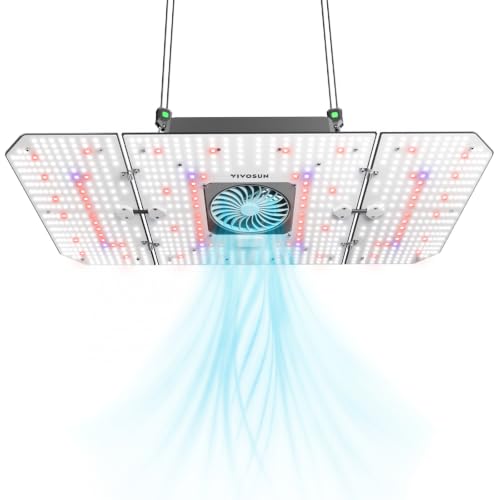
VIVOSUN AeroLight 240W LED Grow Light

AC Infinity IONFRAME EVO4 300W Bar LED Grow Light
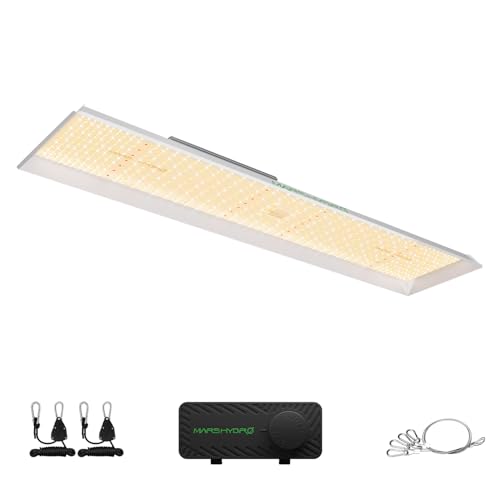
MARS HYDRO 300W TSL2000 LED Grow Light
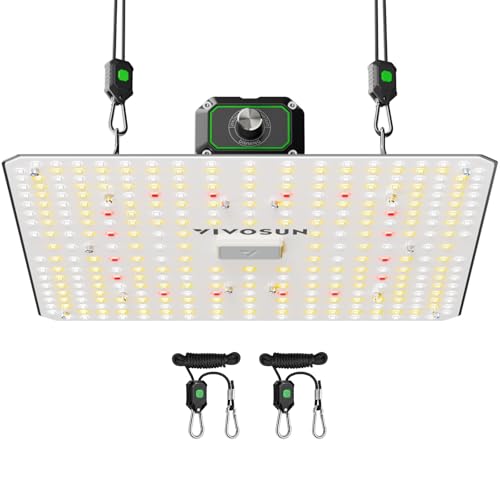
VIVOSUN LumaLight 100W LED Grow Light

VIVOSUN LumaLight 320W LED Grow Light

SANSI 24W Grow Light Bulb 300W Equivalent

MARS HYDRO 150W TS1000 LED Grow Light

MARS HYDRO 300W TSW2000 LED Grow Light

FARMLITE 360W LED Grow Light Bar
Meet The Standout Selections
The XS1500 Pro is a 150W panel, which puts it at the low end of this 300W-class roundup, but the optical lens design makes it punch well above its listed draw. The lenses gather the diode output and aim it downward with minimal scatter, so a small seed-starting shelf gets usable PPFD (photosynthetic photon flux density, a measure of usable light energy reaching the plant) at every corner instead of a hot center and dim edges. That matters when you’re germinating lettuce or starting tomato seedlings under a single fixture, where leggy seedlings in the corners are a common complaint.
Compared to the heavier 300W panels later in this list, the XS1500 Pro stays quiet and cool enough to sit on a wire shelf without cooking the leaves below. For someone setting up their first indoor seed station, this is a comfortable starting point.
Real-World Strengths
- Optical lenses concentrate light, giving seedlings even coverage across the footprint
- Lower wattage means less heat buildup in enclosed shelving
- Daisy-chain dimming supports up to 20 linked units for larger setups
- Full-spectrum output covers vegetative and early flower stages
- Compact form fits standard 2×2 or 2×4 seed-starting trays
Trade Offs
- At 150W actual draw, it falls short for dense flowering tents where full 300W coverage is needed
- No wireless app control, so schedules require a separate outlet timer
Who It Suits Best
A home gardener starting vegetable or flower seeds on a shelf under lights, running a small herb garden, or growing leafy greens in a 2×2 area will get the most from this fixture.
Consider Something Else When
Anyone running a flowering tent with heavy-fruiting plants should look at the MARS HYDRO 300W TSW2000 LED Grow Light, which delivers the canopy penetration a fruiting crop actually demands.
What sets the AeroLight apart is the built-in fan, a small but meaningful addition for anyone running a sealed tent. Heat and stagnant air are the silent killers of indoor gardens: the fan pushes air down through the canopy, which improves CO₂ distribution and keeps humidity even across the leaves. Unlike the static panel in the VIPARSPECTRA XS1500 Pro, this one doubles as a gentle circulation source, so you may be able to drop down to a smaller clip fan in the tent.
The tunable spectrum supports full-cycle growth, meaning vegetative blue-heavy output and flowering red-heavy recipes in one fixture. At 240W actual draw, it sits just under the 300W mark but punches into flowering territory for a 3×3 tent.
What Stands Out
- Integrated fan reduces dead air zones inside the tent
- Tunable spectrum lets you adjust recipes for veg versus flower
- Even canopy coverage in a 3×3 footprint
- Quieter operation than running a separate oscillating fan
Minor Gripes
- The onboard fan adds a moving part that may collect dust over time, so periodic cleaning keeps it running smooth
- 240W is right at the edge for full-coverage flowering in larger tents
Right Fit For
Growers running a sealed 3×3 tent who want light and airflow in one fixture, especially those fighting humidity pockets in dense canopies.
Look Elsewhere When
Anyone who already runs strong inline fans and wants pure light output should consider the AC Infinity IONFRAME EVO4, which puts every watt toward photon delivery without a moving component.
The IONFRAME EVO4 is the most feature-forward bar-style fixture in this group, built around Samsung LM301H EVO diodes (small surface-mounted LED chips that convert electricity into plant-usable light very efficiently). Each chip is rated at 3.14 µmol/J PPE, a unit that measures how many usable photons reach the plant per joule of electricity consumed, which sits at the top of the efficiency curve for home-grade panels. Algorithmically spaced bars spread the output evenly across a 3×3 canopy, so the center plant gets the same light intensity as the corner plants.
The scheduled sunrise and sunset dimming, paired with WiFi app control through the UIS platform, means you can program a 12-hour photoperiod and let the light ramp up gradually in the morning. For tech-comfortable growers, that level of automation feels like a real step up from the dial-based dimmers on the MARS HYDRO TSL2000.
Standout Benefits
- Samsung EVO diodes deliver high photon efficacy, meaning more usable light per watt
- Sunrise and sunset dimming reduces plant stress during transitions
- WiFi app control via the UIS platform for remote scheduling
- Bar layout improves deep canopy penetration into lower bud sites
Honest Caveats
- Higher up-front cost than the MARS HYDRO TSW2000 for similar wattage
- WiFi setup requires the UIS ecosystem, which adds a small learning curve
Made For
Mid-tent growers who want app-based scheduling and the efficiency of name-brand diodes, and who don’t mind paying a premium for that combination.
A Better Fit Elsewhere
Growers on a tighter budget who still want solid bar-style performance should look at the MARS HYDRO 300W TSL2000, which uses a center-dense layout to even out coverage at a more accessible price.
The TSL2000 is a strip-style panel that takes a different approach to even coverage than the bar fixtures above. The diodes are densely packed in the center and spread thin on the sides, creating a uniform PPFD map across a 4×2 footprint. For a long, narrow veg tent or a 4×2 flowering space, that shape works beautifully, since the plants at each end get the same light intensity as the ones in the middle.
Compared to the AC Infinity IONFRAME EVO4, the TSL2000 skips app control in favor of a simple on-board dimmer. That trade-off is worth it for growers who just want to plug in, dial to 80%, and walk away. You can find it running quietly in a 4×2 tent without needing to configure WiFi networks.
What Works In Its Favor
- Center-dense diode layout smooths out light across a 4×2 area
- Full-spectrum output handles seedlings through late bloom
- Simple rotary dimmer keeps operation plug-and-play
- Trusted MARS HYDRO build quality at an accessible price
Points To Keep In Mind
- No wireless scheduling, so pairing with an outlet timer is necessary for sunrise-style cycles
- The long strip shape is awkward in square tents where a more compact panel would fit better
Best Suited To
Growers running a 4×2 tent or a multi-tier shelf setup who prioritize even coverage over remote-control convenience.
Reach For A Different Pick When
Someone working with a square 3×3 space will find the MARS HYDRO 300W TSW2000 LED Grow Light a more natural fit, since its shape matches that footprint directly.
The LumaLight 100W is the smallest, simplest panel on this list, and that’s its main reason for existing. Where the VIVOSUN AeroLight 240W adds a fan and the AC Infinity IONFRAME adds WiFi, this one keeps things bare-bones. White, blue, red, and far-red LEDs (3000K, 5000K, 660nm, and 730nm wavelengths) cover the spectrum a plant needs from seedling through flowering, packed into a slim housing that fits on a small shelf or a corner of a desk.
For a single houseplant, a few potted herbs, or a nursery tray of cuttings, the 100W draw is plenty. Don’t expect it to flower a 4×4 tent, because that’s not the design intent.
Practical Advantages
- Compact housing slips onto shelves, desks, and small plant stands
- Full-spectrum output covers the full growth cycle
- Low wattage keeps heat and electric use minimal
- Far-red 730nm wavelength supports flowering initiation in photoperiod-sensitive plants
Some Limits To Know
- 100W is too light for a serious flowering tent, so this is a starter or supplementary light, not a primary bloom source
- Coverage footprint stays small, so larger gardens would need multiple units
Who Should Grab It
An apartment gardener keeping a handful of houseplants, a hobbyist running cuttings under a single shelf, or anyone wanting a low-heat light for a small herb kitchen.
Swap It Out When
For anything bigger than a single shelf, the VIVOSUN LumaLight 320W LED Grow Light offers the same full-spectrum approach at a much higher output for a proper tent.
The LumaLight 320W is the bigger sibling to the 100W unit, and the upgrade feels meaningful. The micro-lens optic system uses curved, wave-shaped lenses over each diode to redirect and concentrate the light downward, which reduces hot spots and pushes more photons into the canopy. VIVOSUN claims up to 0.89 uniformity across the footprint, meaning the dimmest spot receives 89% of the light intensity the brightest spot does. That’s a real edge in a flowering tent where even light equals even buds.
Where the AC Infinity IONFRAME EVO4 leans on smart controls, this fixture leans on raw optical engineering. The bar-matrix design handles large tents well, though you may find the higher 320W draw demands a more robust inline fan to manage tent temperatures.
Benefits That Matter
- Micro-lens optics improve canopy penetration and uniformity
- 320W output supports full flowering cycles in larger tents
- Scientifically arranged bar matrix minimizes hot spots
- Full-spectrum diodes support vegetative and bloom phases
Practical Considerations
- Higher wattage means more heat output, so tent ventilation must keep up
- Bar-matrix form factor takes up more hanging height than a flat panel
Built With In Mind
Experienced growers running a 4×4 or larger tent who prioritize flowering performance and even canopy coverage over remote-control features.
Where A Sibling Pick Shines
Anyone wanting similar optics but with WiFi app control and scheduled dimming should consider the AC Infinity IONFRAME EVO4 instead.
The SANSI bulb takes a completely different route from the other items here. It’s a 24W LED bulb that screws into a standard E26 socket, marketed with a “300W equivalent” rating that compares its light output to an old-school incandescent. Don’t let that confuse you: this bulb draws 24 watts and delivers far less total light than the MARS HYDRO 300W TSL2000, but it lands in the right spot for casual houseplant care.
At 4000K, the color temperature leans daylight, a balanced white that mimics midday sun, and the secondary optical design aims the light downward so a single bulb covers a small floor plant or a tabletop herb pot. The form factor is the selling point: no tent, no hanger, no driver box. Just a lamp and a bulb.
Good Reasons To Consider
- Screws into any standard lamp socket for instant setup
- Low 24W draw keeps electric cost nearly negligible
- Downward-aimed optic suits a single potted plant
- Full visible spectrum coverage for general houseplant health
Where It May Fall Short
- 24W actual draw is far below the 300W panels in this roundup, so flowering a fruiting crop is not realistic
- Coverage is limited to a small footprint directly below the bulb
Whose Shelf It Belongs On
A houseplant owner with a fiddle leaf fig, a monstera, or a small herb pot who wants a single-bulb solution without committing to a tent setup.
Not Your Match When
Anyone running a flowering tent or growing vegetables from seed should step up to the VIVOSUN AeroLight 240W LED Grow Light, which delivers real fruiting-cycle wattage.
The TS1000 is a compact panel built around MARS HYDRO’s white reflector hood, a patented design that broadens the refraction angle to 120 degrees and reportedly lifts light utilization by 25%. Translation: more of the diode output lands on the plant instead of bouncing off the hood and getting lost as heat. For a small closet or a 2×2 tent, that’s meaningful.
At 150W actual draw, it sits between the seed-starting VIPARSPECTRA XS1500 Pro and the full-size MARS HYDRO TSW2000. Think of it as a starter flowering light: enough output for a single plant or a small herb garden, but not enough for a packed 4×4.
The Good Stuff
- Patented reflector hood broadens light spread and reduces losses
- 150W actual draw hits a practical middle ground
- Full-spectrum diodes work for veg and flower in small spaces
- Compact panel fits closets, 2×2 tents, or single-shelf growing
Factors To Consider
- 150W is on the light side for full-coverage flowering in a 3×3 or larger tent
- No built-in dimmer, so intensity control means raising or lowering the fixture
Perfect Match For
A beginner setting up a single-tent closet grow, a small-scale herb gardener, or anyone transitioning from a basic shop light to a purpose-built LED.
Consider Something Else When
Growers wanting full flowering coverage in a 3×3 tent will find the MARS HYDRO 300W TSW2000 a more appropriate wattage class.
The TSW2000 takes the same center-dense diode layout as the TSL2000 and shapes it for a 3×3 footprint, the most common tent size for a single-light home grow. The result is even PPFD across a square canopy, with corners that don’t lag behind the center. For a flowering run of tomatoes, peppers, or a similar full-cycle crop, that uniformity matters more than raw peak intensity.
Compared to the AC Infinity IONFRAME EVO4, this fixture gives up the WiFi and sunrise dimming but lands at a more accessible entry point. For most growers starting their first 3×3 tent, it’s the kind of fixture you can run for years without outgrowing.
What Makes Sense
- 3×3 footprint matches the most popular home tent size
- Even PPFD spread reduces edge-burnout and corner lag
- Full-spectrum output handles seedlings through late bloom
- Quiet operation suits a bedroom or apartment closet
Points To Note
- No app integration, so outlet timers handle the photoperiod
- The square shape is less flexible than strip fixtures in non-standard tents
Who Should Grab It
Someone setting up their first 3×3 flowering tent, a hobbyist running a mixed veg-and-bloom garden, or anyone upgrading from a blurple panel to a modern full-spectrum LED.
A Better Fit Elsewhere
Growers who want automated sunrise dimming and WiFi scheduling should look at the AC Infinity IONFRAME EVO4 for that next step in control.
The FARMLITE 360W is the most scalable light in this roundup. The daisy-chain dimming feature lets you link more than 100 fixtures and dim them all from one controller, which sounds like overkill for a home grower, but in a multi-light setup it pays off fast. Run two or three of these in a 4×8 tent and you can tune the whole canopy from a single knob.
The aluminum bar housing keeps heat dissipation efficient and the fan noise near zero. At 360W, it pushes the upper edge of the 300W class, so make sure your tent ventilation can handle the thermal load.
Useful Touches
- Daisy-chain dimming supports 100+ linked fixtures for large setups
- Aluminum bar construction dissipates heat effectively
- Silent operation with no internal fan
- Full-spectrum output works for veg and bloom cycles
Things To Weigh
- 360W draw runs hot, so ventilation planning is essential
- The daisy-chain benefit only matters in multi-light setups
Who Will Love This
Multi-light growers running a 4×8 or larger space, or anyone planning to expand their garden with linked fixtures over time.
Where A Sibling Pick Shines
A solo grower running a single 3×3 tent will find the MARS HYDRO 300W TSW2000 a simpler, more cost-effective choice without the scaling features they won’t use.
Picking A 300W LED That Actually Suits Your Space
Choosing the right LED grow light means matching three things: your tent or shelf size, your crop’s light demand, and your tolerance for smart features versus raw output. A 300W-class fixture is versatile enough to flower a 3×3 tent or veg a 4×4, but the spread of designs within this range is wide. Some panels lean on app-controlled dimming, others on optical engineering, and a few on airflow or daisy-chain scaling. Knowing which tradeoff matters to you shapes the right pick.
Footprint And Coverage Shape
Square tents pair naturally with square panels like the MARS HYDRO TSW2000. Long 4×2 veg shelves match strip-style fixtures such as the MARS HYDRO TSL2000. Bar-style layouts, including the VIVOSUN LumaLight 320W and the AC Infinity IONFRAME EVO4, distribute diodes more evenly across the canopy, which helps with deep penetration into dense flower sites. For a small shelf, the VIPARSPECTRA XS1500 Pro or the VIVOSUN LumaLight 100W fits without overwhelming the space.
Spectrum And Growth Stage
Full-spectrum diodes that include 660nm red and 730nm far-red wavelengths handle the entire growth cycle, meaning you won’t need to swap bulbs between vegetative and flowering phases. The MARS HYDRO TSL2000 and the FARMLITE 360W both cover that range. Tunable spectrum fixtures, like the VIVOSUN AeroLight 240W, let you shift the recipe on the fly, which can be useful for growers running separate mother and flower rooms.
Smart Features Versus Plug-And-Play
WiFi app control, sunrise dimming, and daisy-chain programming add convenience but also complexity. If you want to set a timer and walk away, the MARS HYDRO TS1000 or the FARMLITE 360W keep operation simple. If you enjoy dialing in cycles from your phone, the AC Infinity IONFRAME EVO4 is the most programmable option on this list. For anyone running a single shelf with houseplants, a SANSI bulb drops into a regular lamp with zero setup at all.
What Most Shoppers Get Wrong
Pitfalls Shoppers Hit
The most common mistake is matching listed wattage to actual draw. Many “300W equivalent” bulbs and panels draw far less from the wall than their advertised number, which can leave a flowering tent underpowered at the critical bloom stage. Always check the actual wattage draw before committing to a fixture for a fruiting crop.
Where The Extra Money Goes
Higher-tier panels like the AC Infinity IONFRAME EVO4 and the VIVOSUN LumaLight 320W invest the upcharge in diode efficiency, optical lens systems, and build quality. Those upgrades translate into more usable light per watt and better canopy uniformity. For a single small tent, a mid-range fixture often does the same job at a lower cost. For a multi-light setup or a flowering tent where even coverage drives yield, the upgrade tends to pay back through harvest weight.
Frequently Asked Questions
How Big A Tent Can A 300W LED Cover?
A 300W LED comfortably covers a 3×3 foot tent for full flowering and can stretch to a 4×4 for vegetative growth with even hanging height. Going larger means light intensity drops off at the edges, which can lead to uneven growth in the corners.
Do LED Grow Lights Produce A Lot Of Heat?
LEDs run cooler than older HID (high-intensity discharge) lamps like HPS or metal halide, but they still put out heat proportional to their wattage. A 300W LED adds meaningful warmth to a sealed tent, so plan for an inline fan and ducting to keep temperatures in the 75–82°F range that most plants prefer.
What Is The Difference Between Actual Wattage And Listed Wattage?
Actual wattage is what the fixture pulls from your outlet. Listed wattage sometimes refers to a comparison to older bulbs, like a “300W equivalent” LED that actually draws 24W. For tent sizing and plant lighting, always use the actual wattage drawn from the wall.
Can I Leave Grow Lights On All Night?
Plants need a dark period to complete their growth cycle, so running lights 24/7 stresses most species. Most flowering plants thrive on an 18-hour vegetative cycle and a 12-hour flowering cycle, which means a timer or smart controller becomes essential once you commit to a real schedule.
Do I Need A Special Outlet For A 300W LED?
A standard 15-amp household circuit handles a single 300W LED with room to spare. Running multiple high-wattage fixtures on the same circuit can trip the breaker, so dedicated circuits are common in larger multi-light setups.
The Takeaway
A 300W-class LED is the workhorse wattage for home indoor gardening, flexible enough to start seeds, run a full bloom cycle, or fill a multi-light grow room. Match the fixture to your tent shape, decide whether you want smart features or pure output, and you’ll land on a panel that runs quietly for years.