

A 2×4 grow tent is a tight box to light well, and I see beginners grab the brightest panel they can find, only to bleach leaves or fry seedlings with uneven spread. The trick is matching wattage and diode layout to the footprint, then choosing spectrum and control features that fit how you actually garden. I pulled together nine 2×4 grow lights that handle that balance in different ways, from budget strips to high-end bars with app control. Whether you’re running leafy greens or pushing a flowering cycle, one of these should slot right into your setup.
The Main Contenders

RDJ Bouns 240W Led Grow Light with UV IR, Adjustable Panel Angle, 0-100 Dimmable, Daisy Chain

Barrina TX-L84 4FT LED Grow Light, 84W
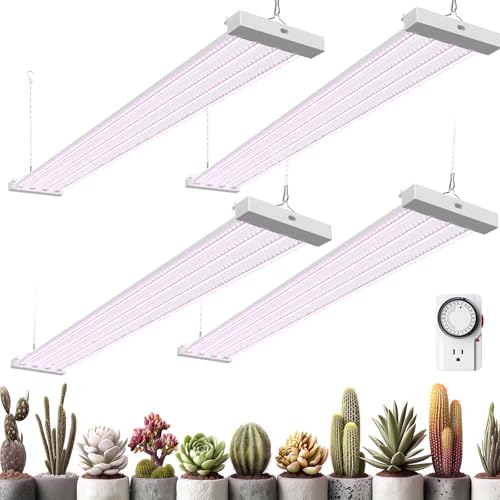
Barrina TX-L84 4FT LED Grow Light, 336W (4 x 84W)
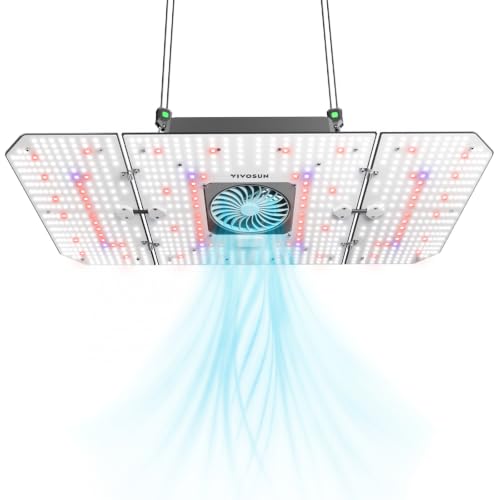
VIVOSUN AeroLight 240W LED Grow Light with Fan

AC Infinity IONFRAME EVO3, 280W Samsung EVO Bar

Spider Farmer G4500 LED Grow Light 320W, App-Controlled
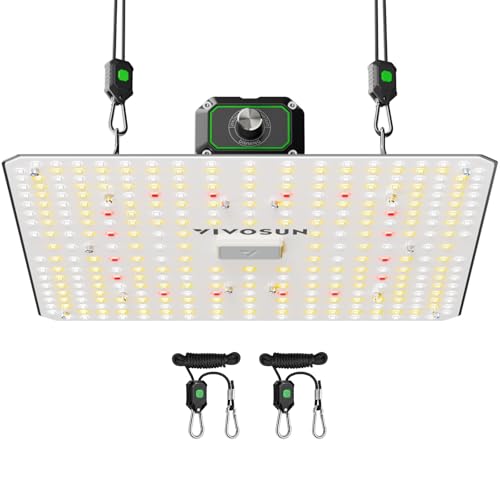
VIVOSUN LumaLight 100W LED Grow Light

Spider Farmer SF1000 2 Pack LED Grow Lights

VIVOSUN LumaLight 320W LED Grow Light
Taking A Closer Look At The Options
The RDJ Bouns 240W panel leans into flexibility in a way most 2×4 fixtures don’t. The adjustable panel angle means you can tilt the wings to chase light down into corners, and daisy-chaining several units off one outlet is a real relief when you’re running multiple tents. In a standard 4×2 or 4×4 setup, the SANAN 3030 chips deliver a sunlike blend of 3000K, 5000K, and 660nm wavelengths, with UV and IR tucked in for resin and stem development.
PPFD (photosynthetic photon flux density) measures how much usable light actually reaches the canopy, and this panel pushes enough of it to drive a full flower cycle. I think growers who flip between veg and bloom in the same tent benefit most, since the 0 to 100% dimmer removes the need to swap fixtures mid-run.
Bright Spots
- Adjustable panel angle targets dim corners where flat panels typically fall short.
- 0 to 100% dimming means one fixture covers seedling through late flower without swaps.
- Daisy-chain support simplifies multi-tent wiring and keeps outlet use minimal.
- UV and IR additions support resin production and stem stretch in flowering.
- Full-spectrum 3000K, 5000K, and 660nm blend supports photosynthesis across stages.
Things To Consider
- The adjustable hinges may need a quick check every few weeks, since vibration from inline fans can nudge them loose over time.
- Higher upfront cost than single-panel budget fixtures, depending on current listings.
Feature Snapshot
Who It Suits Best
Multi-cycle home growers running a 4×2 or 4×4 tent who want one fixture that adapts across veg and flower without constant swapping.
Consider Something Else When
Quiet-operation seekers should look at the Spider Farmer G4500, whose fanless bar layout keeps a tent near-silent during night cycles.
The Barrina TX-L84 arrives as four flat panels strapped into one 4-foot bar, which is a clever way to stretch 84W across the full 2×4 footprint. Hung at roughly 12 inches above the canopy, it covers around 47 by 20 inches with even light, so a flat of lettuce or a row of herbs gets consistent intensity edge to edge. Compared to the RDJ Bouns panel above, this fixture trades raw wattage for a softer, more diffuse footprint.
The trade-off shows up in dense flowering runs, where light-hungry plants may want a second unit overhead. For most beginners running greens, propagation, or early veg, it’s a friendly entry point that costs noticeably less.
What It Does Well
- Four-panel layout spreads light across the full 2×4 footprint with fewer hot spots.
- Low wattage draw keeps heat and electricity use manageable in small tents.
- Full-spectrum diodes support seedlings, herbs, and leafy greens through harvest.
Worth Noting
- 84W may run thin for dense flowering crops, especially in late bloom when plants demand peak PPFD.
- The flat-panel design lacks the adjustability of the RDJ Bouns, so corner reach depends entirely on hanging height.
Made For
Mild-watt beginners growing herbs, seedlings, and leafy greens who want even coverage without a high-output fixture.
A Better Fit Elsewhere
Growers pushing heavy bloom cycles should reach for the Barrina TX-L84 336W instead, since its four 84W panels stacked together deliver the output that light-hungry flowers demand.
Take the same four-panel TX-L84 chassis and stack four of them into one bar, and you get the 336W version, which is essentially a flowering beast. The 47 by 20-inch coverage footprint stays identical to the single-unit version, but the light intensity jumps enough to drive dense canopies through peak bloom. In a 4×2 tent with light-hungry crops, this is the Barrina that earns its keep.
Compared to the lower-watt sibling, the 336W unit throws considerably more photons at the canopy, which means heat management becomes part of the ownership picture. You’ll want solid ventilation.
Points In Its Favor
- 336W total output replaces older 2200W HID units, dropping electricity use dramatically for serious growers.
- Same wide 47 by 20-inch coverage as the 84W version, so layout planning stays simple.
- Full-spectrum red and blue mix supports both vegetative growth and flowering.
Trade Offs
- Heat output climbs with wattage, so tent ventilation needs to keep pace or canopy temps can spike.
- The four-panel layout is heavier than single-bar fixtures, and renters with hanging-height limits may find adjustments tricky.
Best Suited To
Dense, demanding canopy growers running heavy bloom cycles who need the photon count to match plant appetite.
Skip It When
Gentle-greens growers should turn to the VIVOSUN LumaLight 100W instead, since their seedlings and herbs would struggle under this much intensity.
The AeroLight 240W is the odd one in this roundup, because the selling point isn’t just light, it’s air. VIVOSUN tucked a central turbo fan into the fixture that pushes air down through the canopy, breaking up stagnant zones that invite mold and weak stems. CO₂ distribution improves too, which is something most 2×4 tents struggle with when the inline fan sits in one corner.
The fan runs up to roughly 2600 RPM, so it’s not silent, but it pulls double duty as both a circulation booster and a heat mover. For growers in tight tents where humidity creeps up overnight, that’s a real perk.
The Value In It
- Built-in fan circulates air through the canopy, cutting stagnant pockets where mold often starts.
- Full-spectrum tunable recipes match light to each growth phase.
- 240W output handles a full bloom cycle in a 2×4 footprint without supplemental lighting.
- Combined light and airflow reduces the need for a separate clip fan in smaller tents.
Points To Note
- The integrated fan adds operational noise, which is something to weigh in bedroom or apartment setups.
- More moving parts means more potential maintenance over years of daily use, though owners commonly report solid reliability.
Feature Card
Who Should Grab It
Growers wrestling with stagnant-air tents who want to combine lighting and circulation in a single overhead unit.
Look Elsewhere When
Noise-sensitive apartment growers should consider the AC Infinity IONFRAME EVO3, which uses a passive cooling bar design that runs whisper-quiet.
The IONFRAME EVO3 is the one I’d hand to a friend who treats indoor gardening like a craft. Each Samsung LM301H EVO diode runs at 3.14 µmol/J PPE (photosynthetic photon efficacy, the measure of how efficiently a fixture converts electricity into usable plant light), which is genuinely higher than the older LM301B and Bridgelux 3030 chips in many mid-tier lights. That efficiency translates to lower electricity bills over months of daily cycles.
The bar-style form factor spaces diodes algorithmically across the fixture, which spreads light evenly from edge to edge instead of dumping everything in a center hotspot. Programming sunrise and sunset dimming through the UIS platform adds a slow ramp that plants respond to well.
Key Advantages
- Samsung LM301H EVO diodes deliver top-tier efficiency, so the same light uses less electricity than older chips.
- Bar-style layout with algorithmic spacing reduces hot spots and improves edge coverage.
- UIS platform compatibility opens up WiFi app control for growers who like scheduling and data.
- Ten brightness levels and sunrise/sunset dimming ease plants through transitions.
- Passive cooling keeps the unit silent during operation.
Room For Improvement
- UIS ecosystem gear costs more upfront, and you’ll want a compatible controller to unlock the app features.
- The premium diode density makes the unit heavier than budget bars, so hanging hardware needs solid tent poles.
Perfect Match For
Detail-oriented hobbyists who want top-tier efficiency, smart scheduling, and quiet passive cooling in a single fixture.
Another Choice May Suit
Shoppers on tighter budgets should weigh the Spider Farmer SF1000 2 Pack, which delivers solid full-spectrum light without the premium controller cost.
The G4500 is the bar-style workhorse I’d pick for tents where corners often go dim. The elongated bar design stretches diodes across the full 2×4 footprint, so the edges of the canopy get the same intensity as the center, which is something most flat-panel fixtures struggle with. Bridgelux diodes push 320W at an impressive 2.85 µmol/J PPE, which puts the efficiency right in the conversation with the AC Infinity above.
App control via the Spider Farmer platform lets you schedule on/off cycles and dimming from a phone, which is a small convenience that adds up over months of daily use.
What Stands Out
- Bar layout delivers more uniform edge-to-edge canopy coverage than flat-panel fixtures in the same wattage range.
- App-based scheduling removes the need for a separate timer in many setups.
- Bridgelux diode efficiency at 2.85 µmol/J keeps electricity use reasonable for the output.
- Covers 3×5 or 2×4 footprints, giving layout flexibility as your tent setup evolves.
Softer Spots
- App-dependent features mean a firmware update or connectivity hiccup can complicate remote control until reset.
- The unit runs warm at 320W, so tent ventilation matters more than with the gentler VIVOSUN LumaLight 100W.
Built With In Mind
Connected-tent growers who want phone-based control and edge-to-edge canopy uniformity in a single bar fixture.
Reach For A Different Pick When
Growers who prefer absolute simplicity without app dependency should consider the RDJ Bouns 240W, whose manual dimmer and daisy-chain controls stay self-contained.
The LumaLight 100W is the gentlest fixture in this roundup, and that’s exactly why it earns its spot. White, blue, red, and far-red LEDs (3000K, 5000K, 660nm, and 730nm) combine into a full spectrum that supports seedlings, herbs, and small fruiting plants without overwhelming them. Compared to the heavier 240W and 320W panels earlier, this one runs cool and quiet, which suits a 2×4 tent where heat builds fast.
The honest read is that 100W won’t drive a heavy bloom cycle in a full 2×4 footprint, so I think of this as a propagation and greens specialist rather than a main flower light.
Advantages To Know
- Full-spectrum 3000K, 5000K, 660nm, and 730nm LEDs support photosynthesis from seedling to small harvest.
- Low 100W draw keeps heat minimal, which is helpful in small or poorly ventilated tents.
- Strategic diode layout delivers balanced PPFD for uniform early-stage growth.
Honest Caveats
- 100W is underpowered for dense flowering runs, so this fixture works best as part of a multi-light setup or for greens only.
- Lacks the dimming and app features found on the higher-watt VIVOSUN siblings in this roundup.
Quick Facts
The Right Fit
Seedling and herb growers who need gentle, cool-running light for early stages or kitchen-counter gardens.
Where A Sibling Pick Shines
Full-cycle flower growers should reach for the VIVOSUN LumaLight 320W instead, which shares the brand’s diode logic but pushes the output needed for dense bloom.
Two SF1000 units bought as a pair is one of the most adaptable ways to light a 2×4 tent, because you can position them in parallel bars or stagger them corner-to-corner depending on plant height. Each unit uses upgraded diodes at 2.5 µmol/J system PPE (the overall efficiency of the fixture including driver losses), with a potent blue spectrum that drives tight internodal spacing in veg. Fanless silent operation is a real perk in apartments where any hum becomes a nightly annoyance.
Compared to the single Spider Farmer G4500 above, the SF1000 pair trades the app control and bar uniformity for the ability to adjust each light independently as the canopy fills in.
Where It Excels
- Dual-light setup spreads intensity more evenly than a single panel, with positioning flexibility as plants grow.
- Fanless design runs completely silent, which matters in bedroom or living-space tents.
- Potent blue spectrum supports compact vegetative growth and strong root development.
- Full-spectrum output covers seedling through bloom on a single setting.
Minor Gripes
- Two separate power cords require two outlets or a splitter, which can complicate cable management in smaller tents.
- Lacks the dimming range and app features of the G4500, so intensity adjustments are more manual.
Whose Shelf It Belongs On
Tent-shape adapters and quiet-operation growers who want two independent lights to position around irregular canopies.
Swap It Out When
Single-fixture simplicity seekers will find the AC Infinity IONFRAME EVO3 easier to manage than two separate units wired into one tent.
The LumaLight 320W closes out this roundup with what I think is the most thoughtful optical design in the lineup. The micro-lens optic system uses curved, wave-shaped lenses to redirect and concentrate photons toward the canopy, which boosts usable light while softening the spread across the tent floor. With up to 0.89 uniformity, hot spots become a smaller concern, and every plant from edge to edge gets a similar dose.
The bar-style matrix spreads diodes across the canopy for even coverage, so growers running larger high-yield setups don’t have to babysit corner plants.
Real-World Strengths
- Micro-lens optics redirect light deeper into the canopy, improving usable intensity over bare-diode bars.
- 0.89 uniformity rating reduces edge dimming, giving every plant similar photon exposure.
- 320W output drives dense bloom cycles in a 2×4 tent without supplemental lighting.
- Scientific diode arrangement supports consistent yields across the full footprint.
A Few Limitations
- Higher wattage means more heat, so tent ventilation and exhaust fans become essential in warm rooms.
- Optic-lens design adds weight and depth, which can crowd low-ceiling tents.
Spec Overview
Right Fit For
Even-edge canopy growers running high-yield setups who value optical engineering over raw wattage.
Not Your Match When
Low-ceiling tent growers should pick the lower-profile VIVOSUN AeroLight 240W instead, which mounts more flush to the tent roof.
Picking A 2×4 Grow Light That Actually Fits
Match Wattage To Your Tent And Crops
The first thing I look at is whether the fixture has enough wattage to cover a 2×4 footprint without leaving dim corners. A 100W panel works for herbs and seedlings, but flowering plants usually want 200W or more per 2×4 area to hit the PPFD targets that drive bud density. Dimming helps because it lets a single fixture ride along through every growth stage, from gentle seedling light to peak bloom intensity.
Understand Spectrum And Diode Quality
Full-spectrum LEDs combine blue (around 5000K), warm white (3000K), red (660nm), and sometimes far-red (730nm) to mimic the sun’s growth bands. Higher-end fixtures use Samsung LM301H EVO or Bridgelux 3030 chips, which convert electricity into usable plant light more efficiently than older or generic diodes. That efficiency matters over months of daily cycles, because every percentage point of PPE (the photosynthetic photon efficacy, measured in µmol/J) translates into real savings on the power bill.
Decide On Control Features
Manual dimmers and on/off switches work fine for many home growers, but app control and programmable scheduling open up sunrise and sunset ramps that plants respond to well. Built-in fans add airflow but also noise, while passive-cooled bar fixtures stay silent. Passive designs are easier on the ears in apartments, while fan-cooled units can pull double duty in tents where air circulation is weak.
Factor In Heat, Noise, And Mounting
A 320W fixture throws meaningful heat, so tent ventilation matters. Heavier units also strain hanging hardware, and renters with adjustable tents should check the mount style before committing. Consider where the unit will sit, how loud it will run during night cycles, and whether your tent poles can handle the weight before settling on a model.
Common Slip Ups And Smart Upgrades
Where Shoppers Go Wrong
The biggest mistake I see is choosing wattage without considering tent footprint, because a 240W panel dropped into a 4×4 space spreads too thin and leaves corners dim. Running a high-watt fixture without proper ventilation is another common trap, and canopy temperatures climb fast under heavy LEDs. Beginners also tend to skip dimming entirely, then wonder why their seedlings bleach out under full power.
What The Higher Tier Buys
Premium fixtures justify their cost through diode efficiency, which lowers long-term electricity use, and through better thermal design, which extends diode lifespan. Bar-style layouts with algorithmic diode spacing improve uniformity, and app-based scheduling adds convenience that compounds over months of daily cycles. For growers running multi-tent setups or pushing heavy bloom cycles, the upgrade pays back through yield consistency and reduced climate control headaches.
Frequently Asked Questions
What Wattage Do I Need For A 2×4 Grow Tent?
Most flowering plants in a 2×4 tent want 200W to 320W of LED output to hit the PPFD levels that drive dense blooms. Leafy greens and herbs can get by with 80W to 150W, since their light demands sit well below flowering crops.
How Important Is PPFD When Choosing A Grow Light?
PPFD measures usable light reaching the canopy in micromoles per square meter per second, which directly affects how well plants photosynthesize. Higher PPFD at the right hanging height drives stronger growth, but excessive PPFD without dimming bleaches leaves, so balance matters more than peak numbers.
Should I Pick A Bar-Style Or Panel-Style Fixture?
Bar-style fixtures spread diodes across the tent for better edge uniformity, while panel-style units concentrate light in the center. For 2×4 tents where corners often go dim, bar layouts usually deliver more even coverage, though quality panel fixtures with adjustable angles can match that performance.
Is UV And IR Worth Having In A Grow Light?
UV and IR additions support resin production, stem development, and flowering responses in some crops, but they’re optional rather than essential. Most full-spectrum fixtures without UV or IR still grow healthy plants, so the upgrade matters more for growers chasing maximum potency than for beginners learning the ropes.
How Often Should I Replace My Grow Light?
Quality LED fixtures typically run 50,000 hours or more before diode output drops meaningfully, which works out to several years of daily cycles. Most growers replace lights because they want newer technology, not because the old fixtures failed.
Final Verdict
A 2×4 grow tent rewards growers who match wattage, spectrum, and diode quality to their crop, and any of the nine fixtures above will light that footprint well. Beginners running greens and herbs get the gentlest path with the VIVOSUN LumaLight 100W, while serious flower growers will find the AC Infinity IONFRAME EVO3 or Spider Farmer G4500 hard to beat for efficiency and control. Pick the one that fits your tent, your crop, and your patience for setup, then dial in the dimmer and let the canopy do the rest.