

Setting up an indoor garden means choosing light that actually reaches every leaf, not just blasting the top canopy. I put together this list because the 1000w class is where hobby growers and serious home gardeners land when wattage stops mattering and light quality takes over. You’ll find floor models for living-room fiddle leaf figs, bar fixtures for sealed tents, and compact panels for seedlings, each with the trade-offs spelled out plainly.
A Snapshot Of The Selections

Garpsen Floor Grow Light, 3 Head Full Spectrum
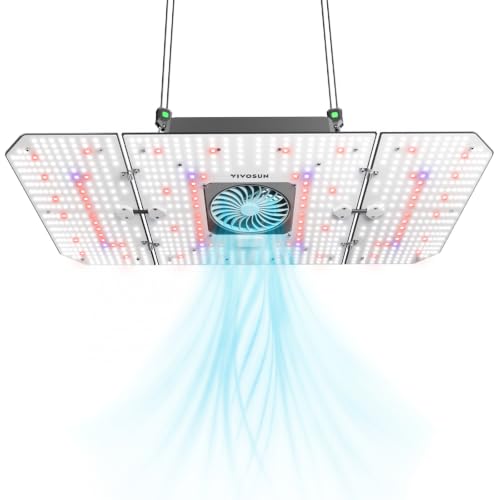
VIVOSUN AeroLight 240W LED Grow Light with Fan
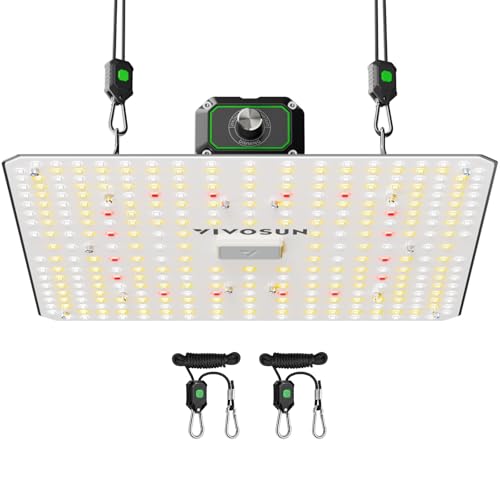
VIVOSUN LumaLight 100W LED Grow Light

AC Infinity IONFRAME EVO10 1000W Samsung EVO Bar

Garpsen Grow Lights for Indoor Plants with Stand

Garpsen Halo Grow Lights Dual-Head 6000K
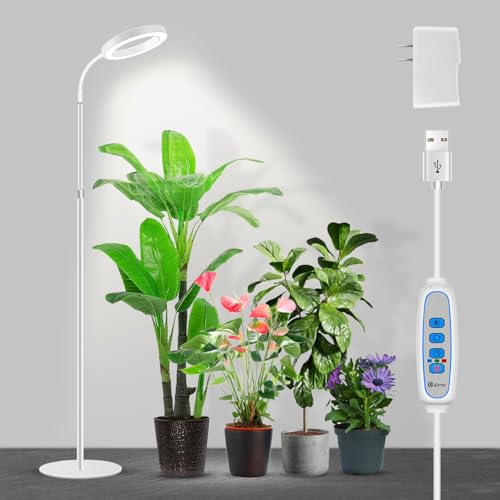
Garpsen Grow Light Full Spectrum with Stand

VIVOSUN LumaLight 320W LED Grow Light

1000W LED Grow Light UV-IR Hanging Panel

TATU 1000w LED Grow Light Full Spectrum
What Each Pick Brings To The Table
Tall indoor plants often outgrow a windowsill long before they outgrow the room, and that’s where a floor grow light earns its place. The Garpsen Floor Grow Light uses three adjustable heads on a telescoping pole, letting me direct light toward a fiddle leaf fig, a tall snake plant, or a climbing pothos without rotating the whole base.
Where the first pick differs from a panel like the VIVOSUN LumaLight 320W below is its portability: there’s no hanging hardware, just a weighted floor base. For renters or anyone cycling the light between rooms, that flexibility matters more than raw wattage.
Strengths Worth Knowing
- Three heads spread coverage across wide canopies without rearranging the plant
- Telescoping pole reaches taller species that a desktop panel can’t touch
- Sturdy metal base keeps the fixture planted firmly on hardwood or tile
- Gooseneck arms pivot independently for awkward leaf clusters
- Full-spectrum output supports both foliage and flowering houseplants
Things To Consider
- Floor footprint may crowd tighter apartments or narrow hallways
- Dust collects on the ring shades, so a quick wipe-down every few weeks keeps output steady
Made For
Apartment dwellers with one or two tall floor plants who want fuss-free supplemental light without mounting hardware.
Skip It When
A sealed grow tent calls for it, and the VIVOSUN AeroLight 240W brings the airflow and tunable spectrum that sealed environments demand.
Heat and stagnant air quietly cap how well any LED performs inside a sealed tent, and the AeroLight sidesteps both with a built-in central fan. Where Item 1 was built for living-room flexibility, this panel is engineered to hang in a 2×4 or similar tent and keep the canopy breathing.
I appreciate that it pairs circulation with a tunable spectrum, so seedlings, veg, and flower stages can ride one fixture. Tunable spectrum means you can shift the ratio of blue and red diodes to match what each growth stage actually needs.
Standout Benefits
- Integrated fan circulates CO₂ and cuts down on humidity pockets around leaves
- Adjustable spectrum supports each growth phase on a single fixture
- Compact panel size fits smaller tents where bar fixtures won’t clear
Trade Offs
- 240W won’t cover a 5×5 footprint, so larger rooms need a second unit or the AC Infinity IONFRAME EVO10
- Fan noise registers in quiet living spaces, making it a better fit for basements or garages
- Owners commonly report fan bearings wearing after extended daily runs
Best Suited To
Hobbyists running a sealed 2×4 tent who want airflow and spectrum control without buying two separate pieces of gear.
Look Elsewhere When
You need to bathe a single tall floor plant in light, where the Garpsen Floor Grow Light’s three-head design adapts much more naturally.
Seedlings and small herbs don’t need tent-scale wattage, and that’s exactly where the LumaLight 100W earns its keep. Compared to the AeroLight above, this panel skips the fan and shrinks the footprint, which is just right for a kitchen counter or a single propagation tray.
The diode mix pulls together white, blue, red, and far-red wavelengths, giving young plants a balanced start before they graduate to a heavier fixture like the LumaLight 320W later in the list.
Noteworthy Benefits
- Compact panel hangs over a small tray without dominating the room
- Far-red diodes help trigger flowering responses when you’re ready to flip cycles
- Low heat output lets it sit close to tender seedlings without scorching
Worth Noting
- 100W coverage tapers off fast on anything bigger than a 2×2 footprint
- No built-in mounting hardware beyond hanging loops, so a stand or chain is a separate purchase
Whose Shelf It Belongs On
Beginners starting a few herbs or microgreens who want a quiet, low-heat panel without tent infrastructure.
Reach For A Different Pick When
A full flower cycle is the goal, because the TATU 1000w LED Grow Light below delivers the broader spectrum and intensity bloom-phase plants demand.
The IONFRAME EVO10 is the serious grower’s answer to uneven canopy coverage, and its bar-style layout with algorithmically spaced diodes does most of the heavy lifting. Where the VIVOSUN AeroLight stays compact, this fixture spreads its diodes across a full 5×5 footprint so every corner of a larger tent gets equivalent light.
Samsung LM301H EVO LEDs sit at the heart of the design, rated at a high PPE (photosynthetic photon efficacy), which is a measure of how efficiently the fixture converts watts into plant-usable photons. That efficiency matters once electricity bills start arriving.
Where It Excels
- Bar layout reaches deep into the canopy instead of just lighting the tops
- Programmable sunrise and sunset dimming ease plants between light cycles
- Passive cooling keeps the diodes running quieter than fan-cooled panels
- WiFi app control through the UIS platform makes schedule tweaks painless
Some Limits To Know
- 1000W draw means a dedicated circuit in most homes, so renters should check their panel first
- Higher upfront cost than smaller panels, even though operating cost per diode stays reasonable
- Requires a sturdy tent frame: hanging a 5×5 bar fixture on a flimsy pole is asking for trouble
Feature Card
Who It Suits Best
Experienced growers running a 5×5 tent who care about deep canopy penetration and app-based scheduling.
Consider Something Else When
The setup is a small herb garden on a counter, where the Garpsen Halo Grow Lights dual-head floor design fits the scale far better.
Most “grow light” searches return fixtures that need a tent or a ceiling hook, and that’s the gap this Garpsen fills. The included stand lifts the panel above a row of pots without any installation, and 80 LEDs in the head give small herbs a genuine daily dose of usable light.
Compared to the Garpsen Floor Grow Light earlier, this is a smaller and quieter setup aimed at kitchen gardeners rather than floor-plant owners. The built-in timer is the real time-saver here.
Features That Help
- Stand frees up counter space that a hanging setup would have eaten
- Built-in timer automates the on/off cycle without a smart plug
- Full-spectrum output covers leaf, herb, and flowering houseplant needs
Points To Note
- Stand height caps how tall a plant can grow before it outgrows the panel
- Light intensity drops off fast past a single small tray, so larger collections need a second unit
Right Fit For
Anyone growing basil, lettuce, or a small herb cluster on a kitchen counter who values a timer over fine-tuned spectrum control.
A Better Fit Elsewhere
Tall canopies that need even top-to-bottom coverage, where the VIVOSUN LumaLight 320W’s bar optics reach deeper into the plant.
The Halo leans into a wider ring design, with 168 LEDs spread across two translucent heads that throw light in a broader spread than the average gooseneck panel. The 6000K color temperature leans cool and blue-heavy, which is the wavelength range most associated with compact vegetative growth.
Where the earlier Garpsen three-head model spreads light to corners, this dual-head version trades one head for a wider ring per head, which is a different geometry that suits flatter, bushier plants rather than tall climbers.
What Pays Off
- Translucent ring shades increase light transmission compared to opaque housings
- Metal base with cotton pads resists sliding on smooth flooring
- Telescoping pole adjusts height to follow plants as they grow
- Cool 6000K spectrum encourages stocky, leafy growth in vegetative herbs
Practical Considerations
- Two heads may leave shadows on very wide or multi-stemmed plants
- Cotton base pads need occasional cleaning to keep grip on slick surfaces
Built With In Mind
Houseplant owners with bushy, mid-height species like monsteras, rubber plants, or peace lilies that need broad, even light.
Swap It Out When
The garden is a flowering or fruiting crop that needs red-heavy spectrum, where the TATU 1000w LED Grow Light offers a more balanced white-blue-red blend.
The wavelength range here runs from 380 to 800 nanometers, which covers the full photosynthetic spectrum plants use, and adds 660nm red for stronger flowering cues. Compared to the cooler Halo above, this Garpsen tilts warmer with a stronger red component, which makes a real difference for leafy greens and herbs edging toward bloom.
I like that it shares Garpsen’s signature translucent ring shade design, so the same bright-transmission housing concept carries across multiple models in the lineup.
What Helps Most
- Strong 660nm red output supports flowering and fruiting cues
- Wide 380 to 800nm coverage mirrors natural sunlight closely
- Translucent shade design lifts output compared to opaque panels
Room For Improvement
- Stand design tops out at moderate heights, so very tall plants may need repositioning often
- Single-head geometry creates shadows on multi-stemmed or wide plants
Perfect Match For
Vegetable and herb gardeners who want a balanced, sunlight-style spectrum from a freestanding fixture without tent hardware.
Another Choice May Suit
Large indoor trees needing multi-angle light, where the Garpsen Floor Grow Light’s three heads spread coverage far more evenly.
The 320W LumaLight uses a micro-lens optic system, where small curved lenses redirect each diode’s beam into a controlled cone that overlaps with adjacent cones. That overlap is what gives the canopy uniform intensity, reducing hot spots that some panels develop directly under their center.
Compared to the 100W LumaLight earlier, this is the grown-up sibling, the same engineering principles scaled into a panel that handles a mid-size tent or a serious home garden without breaking a sweat.
Positive Points
- Micro-lens optics reduce hot spots and improve edge-to-edge uniformity
- Light bar matrix reaches deeper into the canopy than flat panels
- 320W output covers a meaningful footprint without jumping to full 1000W territory
- Full spectrum supports both vegetative and flowering growth stages
Honest Caveats
- Mid-tier power draw still requires a reasonably dedicated outlet
- Heavier than smaller panels, so hanging hardware needs a solid anchor point
Feature Card
Who Should Grab It
Mid-size tent growers running flower cycles who want even canopy coverage without paying full 1000W prices.
Not Your Match When
The garden is a small kitchen herb shelf, where the Garpsen Grow Light with Stand fills the role more practically.
The naming here can mislead, because the listed 1000W is a category descriptor while actual draw sits around 100W plus or minus 5W, which is friendlier on a household circuit. The 238-LED panel includes UV and IR wavelengths, two ranges often left out of budget panels, so plants get a more complete spectrum from seedling through flower.
Compared to the LUYIMIN panel’s hang-anywhere simplicity, the AC Infinity IONFRAME EVO10 brings app integration and Samsung diodes, but it costs considerably more.
Real Benefits
- UV and IR diodes add wavelengths most budget panels skip
- Modest actual wattage keeps electricity costs manageable
- Hanging format fits standard 3×3 or 2×2 tent configurations
- Full-cycle spectrum covers veg and flower without swapping fixtures
Where It Is Less Suited
- Coverage tops out around 3×3 in flower, so larger tents need a second panel
- The 2.5 µmol/J efficacy trails premium panels in pure efficiency
- No mounting hardware included, so ratchet hangers or rope ratchets are a separate buy
Built With In Mind
Tent gardeners running a 3×3 or 2×2 setup who want UV and IR coverage without committing to a high-end price tier.
Where A Sibling Pick Shines
Larger 5×5 tents that need the wider bar coverage of the AC Infinity IONFRAME EVO10 instead of a single hanging panel.
The TATU covers the basics with a straightforward white, blue, and red blend that handles every growth stage in one fixture. The 660nm red supports flowering while the 430nm blue pushes rhizome and leaf development, so there’s no need to swap lights between vegetative and bloom phases.
Where the LUYIMIN above leans on UV and IR extras, the TATU keeps the spectrum simpler and the price more approachable for a first grow tent. It’s the kind of panel I point beginners toward when they ask for one light that handles everything.
Useful Touches
- Single fixture handles both vegetative and flowering stages
- 660nm red supports flowering time and yield boosts
- 430nm blue encourages stocky rhizome and leaf development
- Approachable entry point for first-time tent growers
Worth Bearing In Mind
- No tunable spectrum, so dialing in advanced ratios means swapping fixtures
- Coverage footprint suits small-to-mid tents rather than wide 5×5 layouts
- Heat management relies on passive cooling, which can limit how close the panel hangs to the canopy
Who Will Love This
First-time growers who want one fixture for the entire plant lifecycle without learning spectrum tuning.
Wrong Turns To Avoid
Once growers chase higher yields, the AC Infinity IONFRAME EVO10’s programmable dimming and bar layout reward the upgrade far more than a basic panel can.
Factors That Matter When Choosing 1000w Led Grow Lights
Coverage Area and Footprint Match
Before chasing diode counts, I measure the actual space the light needs to fill. A 5×5 tent and a single windowsill herb pot live in completely different worlds, and matching the fixture to the footprint prevents both wasted light and dim corners. Bar fixtures spread evenly across wide spaces, while panel-style lights concentrate intensity in smaller footprints.
Spectrum and Growth Stage Support
Full spectrum means the fixture blends multiple wavelengths, but the ratio of blue to red shifts how plants respond. Blue-heavy output encourages compact leafy growth, while red-heavy leans push flowering and fruiting cues. Fixtures with tunable spectrum let you shift those ratios without swapping hardware.
Cooling, Noise, and Heat Output
Passive-cooled panels run quiet but dissipate it through the housing, while fan-cooled fixtures push air but add mechanical noise. Heat output also dictates how close the panel can hang to the canopy without scorching leaves, which becomes a real consideration in smaller tents with limited vertical space.
Wattage, Circuit, and Efficiency
Actual draw matters more than advertised wattage, since some panels list their category wattage while pulling a fraction of that from the wall. Check the real consumption against your circuit capacity, and look at PPE (photosynthetic photon efficacy) ratings when comparing efficiency across panels.
Key Considerations Across These Picks
Where Shoppers Go Wrong
A common mistake is chasing the highest listed wattage without checking actual draw or coverage footprint, which leaves plants underlit in a too-large space or overwhelmed in a too-small one. Another slip is ignoring mounting requirements, since some panels need ratchet hangers, dedicated outlets, or sturdy tent frames that aren’t always obvious from product photos alone.
What Separates Premium From Basic
Higher-tier fixtures earn their price through diode quality, app-based scheduling, and uniform light distribution rather than raw wattage claims. Samsung LM301H EVO diodes, algorithmically spaced bars, and passive cooling are the kinds of upgrades that show up in canopy uniformity and long-term reliability, not just the spec sheet. The upgrade pays off most for growers chasing consistent yields across multiple cycles.